

Basement Renovation vs Legal Basement Conversion in Oakville and Halton Hills
Compare a finished basement renovation with a fully legal basement apartment in Oakville and Halton Hills. MyAurora designs, obtains permits and builds Ontario Building Code–compliant secondary suites and family basements for homeowners across the west GTA.


Transform Your Basement — Two Smart Paths
Basement Renovation: Finish and upgrade your space for personal comfort and resale value.
Legal Basement Conversion: Build a fully compliant secondary suite that can be safely rented and insured.


Basement Renovation for Living Space
Transform your unfinished basement in Oakville or Halton Hills into a bright,
comfortable living area that feels like a natural extension of your home. This type of basement renovation is ideal when you want more space for your family without creating a fully separate rental apartment, and prefer a cozy, flexible living zone that you can use every day.
We design finished basements for everyday living – from TV rooms and play areas to home gyms and quiet offices – with the same level of comfort, lighting, flooring and storage you expect on the main floors. Our goal is to make your basement feel like true living space, not a “lower level,” using smart layouts and finishes that fit how your
household actually lives.
- Extra bedroom, quiet office, home gym or media / TV room for everyday living
- Upgraded insulation, lighting and smart storage so the space feels warm, dry and functional
- Optional 3-piece bathroom or wet bar for added comfort and guest convenience
- Moisture control, sound-dampening and finishing details designed for long-term durability
- Flexible layouts that work for growing families, work-from-home setups or hobby space
- Finished basement design that matches the style and quality of the main floors
Legal Basement (Secondary Suite)
Turn your basement in Oakville or Halton Hills into a fully legal secondary suite that is rentable, insurable and mortgage-friendly. This option is ideal if you want a separate apartment that can generate stable monthly income and significantly increase the long term value of your property in today’s GTA real estate market.
A legal basement conversion is designed as a self-contained home within your home, with its own kitchen, bathroom and living area, so it functions as a true legal basement apartment for tenants, extended family or future resale buyers.
- Self-contained, code-compliant secondary suite that can be rented out to long-term tenants
- 45-minute fire separation using Type X drywall assemblies and proper fire-rated details
- Egress window or dedicated exit, sized to meet Ontario Building Code requirements
- Interconnected smoke and CO alarms for both the main unit and the basement suite
- Correct HVAC design and ESA-inspected electrical for safety, comfort and efficiency
- Professional drawings, permit applications and inspections coordinated for you from start to finish
Which Basement Option Fits You Best?
Use this side-by-side guide to compare a standard basement renovation with a
fully legal basement conversion in Oakville or Halton Hills. Both options add usable square footage and long-term value, but a legal secondary suite is specifically designed for ongoing rental income, proper registration and compliance with local bylaws.
If your goal is a comfortable family space, a finished basement renovation is often the best fit. If you want to create a legal basement apartment that can be advertised and insured as a separate unit, a legal basement conversion is usually the smarter long-term investment. The comparison below highlights the key differences in cost, permits, Ontario Building Code requirements, rental potential and return on investment.
| Factor | Basement Renovation (Living Space) | Legal Basement Conversion (Secondary Suite) |
|---|---|---|
| Average cost (1,000 sq.ft) | $22,000–$35,000 | $45,000–$80,000 |
| Permit required | Sometimes – if plumbing or structure changes | Always – full permit and inspections |
| Fire separation | Optional basic upgrades | Approx. 45-minute rated assembly |
| Egress window / exit | Recommended for safety | Required to meet code |
| Legal rental status | Not a legal rental unit | Fully legal secondary suite |
| Typical monthly rent | $900–$1,200 (shared or informal use) | $1,800–$2,400 (separate apartment) |
| Estimated annual income | $10,000–$14,000 | $21,000–$29,000 |
| Approx. payback period | 4–6 years | 2–4 years |
| Estimated 10-year ROI | ≈ 50–70% | ≈ 150–250% |
| Added property value | ≈ $18,000–$22,000 | ≈ $90,000–$140,000 |
| Typical timeline | 4–8 weeks | 10–16 weeks |
These ranges are estimates based on typical basement renovation and legal secondary suite projects in Oakville and Halton Hills. Your exact numbers will depend on your design, finish level, existing conditions, access, engineering needs and local approvals from the city and ESA. Use this comparison as a starting point to decide whether a family-focused finished basement or a fully legal basement apartment is the better option for your home
and long-term financial goals.
OUR 6-STEP BASEMENT RENOVATION PROCESS IN OAKVILLE, HALTON HILLS & GTA (PERMITS INCLUDED)
Our 6-step basement renovation process gives homeowners in Oakville, Halton Hills and the wider GTA a clear, predictable path from idea to finished space. We handle code-compliant design, permit-ready plans and professional construction. From the first basement assessment to final inspections, we make sure your new living space or legal secondary suite is safe, comfortable, Ontario Building Code–compliant and designed for strong long-term value and rental potential
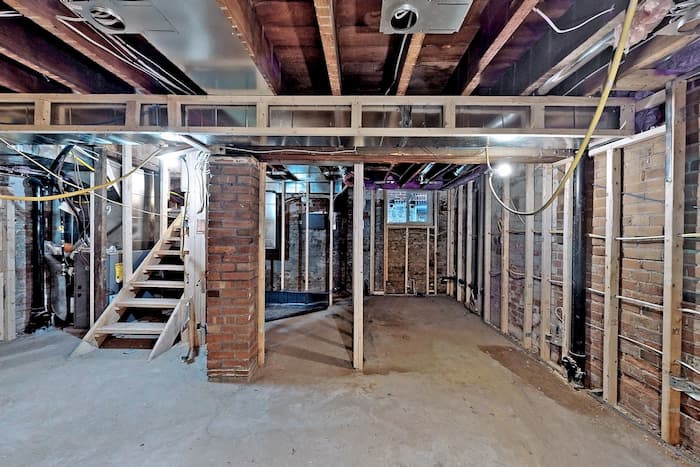
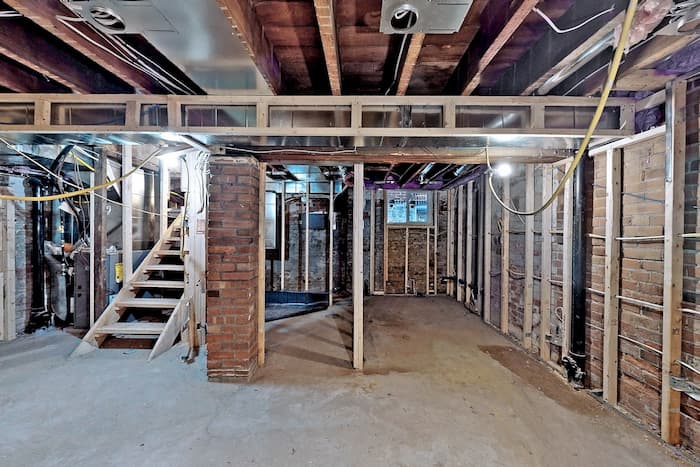
Every MyAurora project in Oakville, Halton Hills and nearby neighbourhoods like
Glen Abbey, River Oaks, Georgetown and Acton starts with a detailed on-site
basement assessment. This first visit helps us understand how you want to use the space and what is realistically possible under the Ontario Building Code (OBC).During the consultation, our project specialist walks through your current basement, takes accurate measurements and reviews your goals, budget and timeline. We look at both a standard renovation and a potential legal secondary suite so you can compare options with real numbers instead of guessing.
As part of the assessment we review:
- Ceiling height, bulkheads and structural clearances
- Fire separation and egress window / exit requirements
- Ventilation, plumbing and electrical layout
- Moisture, insulation and waterproofing conditions
This step gives you a clear starting point and allows us to prepare a permit-ready, transparent estimate with timelines, costs and ROI for your basement renovation or legal suite in Oakville, Halton Hills and across the GTA.

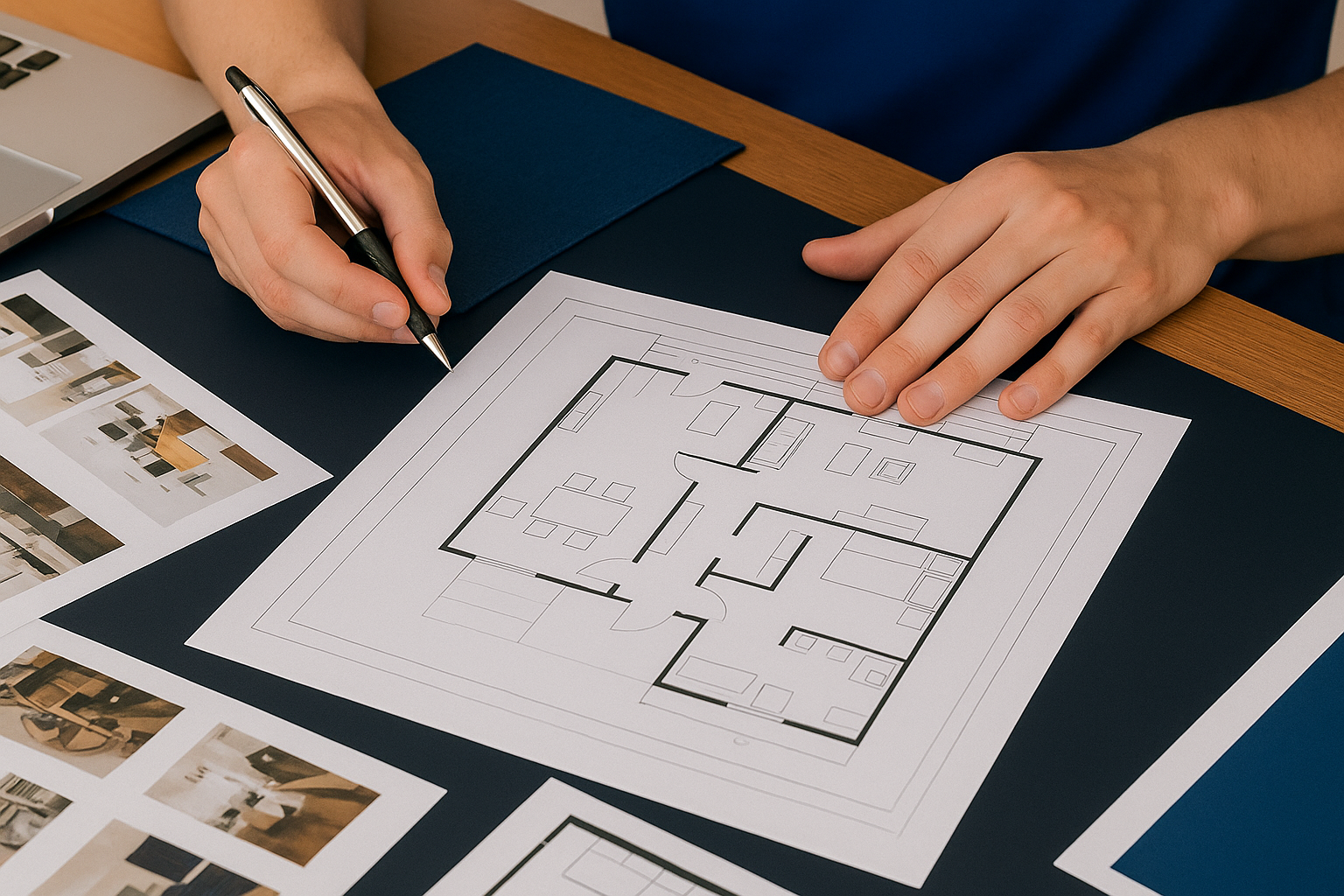
After the assessment, we turn your ideas into a practical design. Our team creates a custom basement layout that fits how you live in areas like Bronte, Kerr Village, Georgetown and Acton — whether you need family space, a home office or a
fully separate legal basement apartment.
The design balances function, finish quality and code requirements. We plan room layouts, bathroom locations, storage, and how mechanical and electrical components will run so that the build is efficient and compliant with the OBC.
Your detailed estimate usually includes:
- Framing, insulation and drywall work
- Plumbing, electrical and HVAC requirements
- Material selections and finish options by level
- Permit, inspection and labour allowances
You receive a line-by-line breakdown so you can clearly see the difference in cost between a standard basement renovation and a full legal conversion, helping Oakville and Halton Hills homeowners choose the option that fits their budget and long-term plans.

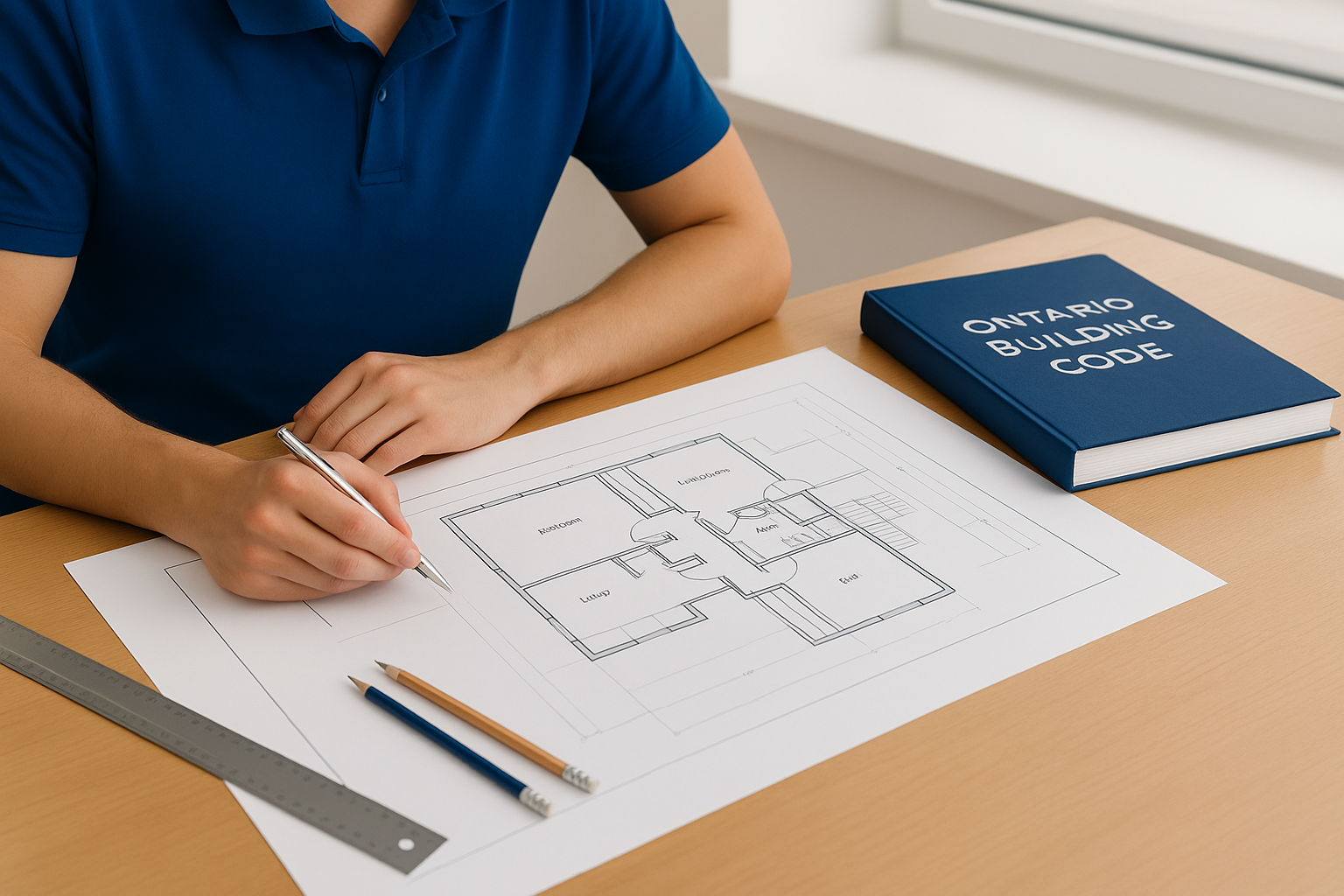
Once you approve the design and budget, our team prepares complete Ontario Building Code–compliant plans and permit drawings for your basement renovation or legal secondary suite. These documents are required to obtain a building permit in Oakville, Halton Hills and all GTA municipalities.
Our drawings show your city exactly how the project will meet safety, fire, structural and energy standards. This is especially important for homes in neighbourhoods like Glen Abbey, River Oaks and Georgetown, where layouts and existing conditions can vary.
Typical permit drawings detail:
- Fire separation assemblies (for example, 45-minute Type X drywall systems)
- Egress window or secondary exit sizing and location
- Smoke and CO alarm placement for both the main unit and the new suite
- HVAC, plumbing and electrical layouts for performance and safety
After you review and approve the plans, we submit them to your municipality, respond to comments and move the permit toward approval so your basement is legal, insurable and inspection-ready before any construction begins.


With permits in place, our licensed trades and project managers complete the full basement build according to the approved plans. We follow all OBC and local inspection requirements for homes in Oakville, Halton Hills and surrounding neighbourhoods like
Bronte, Kerr Village and Acton.
Work is scheduled in logical stages to keep your home as organized and livable as possible. We protect finished areas, manage dust, and coordinate trades so your project moves smoothly from rough framing to final finishes.
The build phase typically includes:
- Framing and insulation for structure, comfort and energy efficiency
- Rough-ins for plumbing, HVAC and electrical systems
- Fire-rated drywall and egress window or exit installation
- Flooring, doors, trim, painting and lighting for a finished, livable space
Throughout this phase, we provide progress updates and quality checks so your new basement or legal suite is delivered with the level of craftsmanship Oakville and Halton Hills homeowners expect.
For final colours and finishes, our crew coordinates with the MyAurora interior house painting team so your new basement walls, ceilings and trim match the rest of your home.
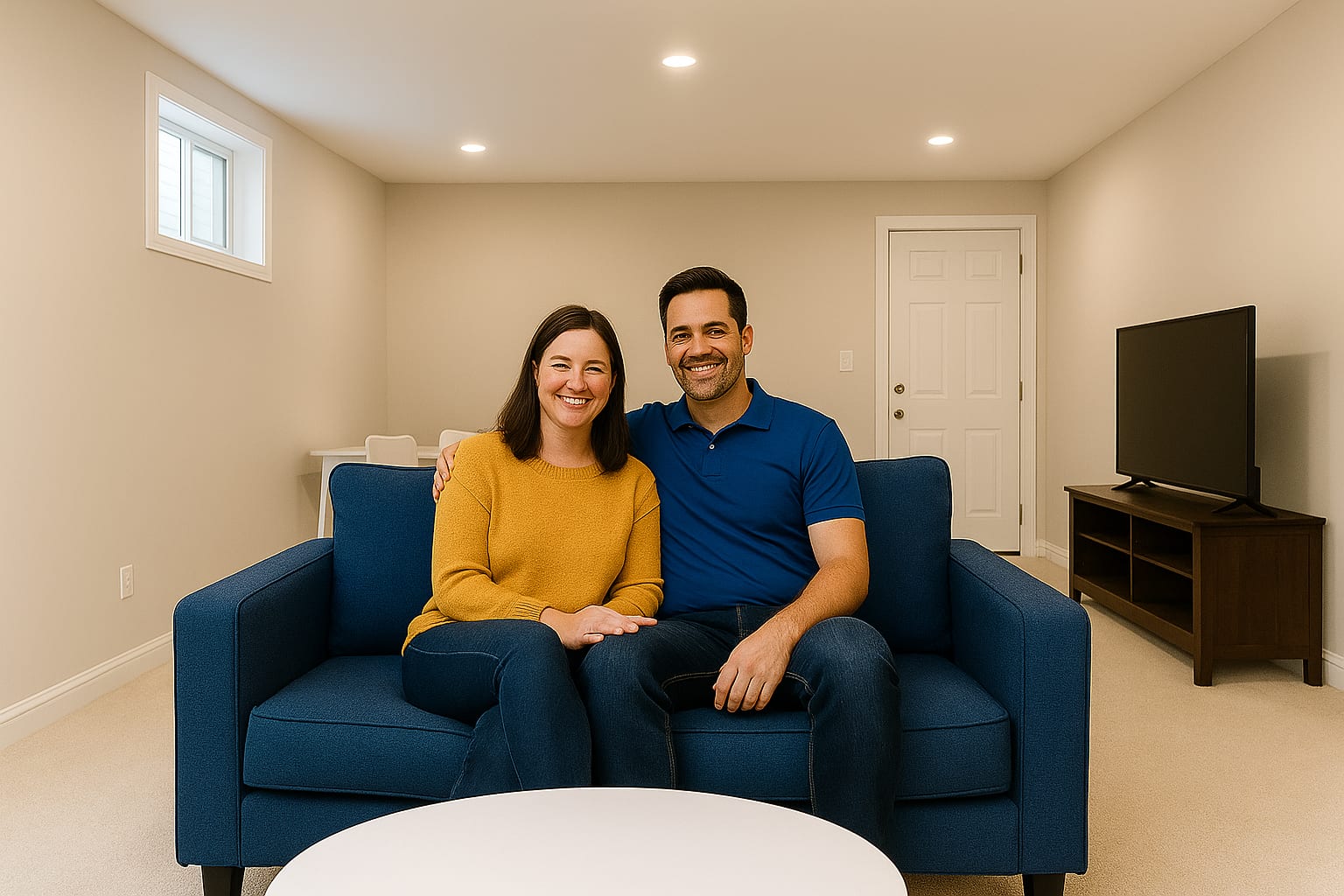

As construction progresses, our team coordinates all required city and ESA inspections to confirm your basement meets the Ontario Building Code and local municipal regulations. This is a key step for any basement that will be rented in Oakville, Halton Hills, Glen Abbey or Georgetown.
Inspectors review major safety and performance elements so your new space is safe to occupy and, in the case of a legal secondary suite, properly registered and insurable for long-term tenants.
Inspections typically cover:
- Fire separation and drywall assemblies
- Egress window or exit door dimensions and placement
- Interconnected smoke and CO alarms in both units
- Plumbing, HVAC and electrical installation
Once all inspections are passed, you receive occupancy approval or an occupancy certificate as required. This confirms that your basement renovation or legal suite is legal, safe and ready for use or rental.


Project handover and warranty is the final stage of every MyAurora basement renovation or legal basement conversion in Oakville, Halton Hills and GTA neighbourhoods like River Oaks, Bronte, Georgetown and Acton. After all city and ESA inspections are approved, we prepare a comprehensive handover package that gives you full documentation and peace of mind.
This handover package typically includes:
- Warranty documents covering workmanship, materials and key installations
- Before-and-after photos that show the transformation of your basement or secondary suite
- Permit records and inspection approvals for legal, insurance and resale purposes
- Maintenance tips and care recommendations to keep your basement in top condition over time
This final step ensures you have everything needed for insurance, resale and rental compliance, and proof that your project meets OBC and local GTA standards. It reflects MyAurora’s commitment to craftsmanship, transparency and long-term value for homeowners in Oakville and Halton Hills.
Legal Basement Apartment for Mortgage Help
Legal Suite
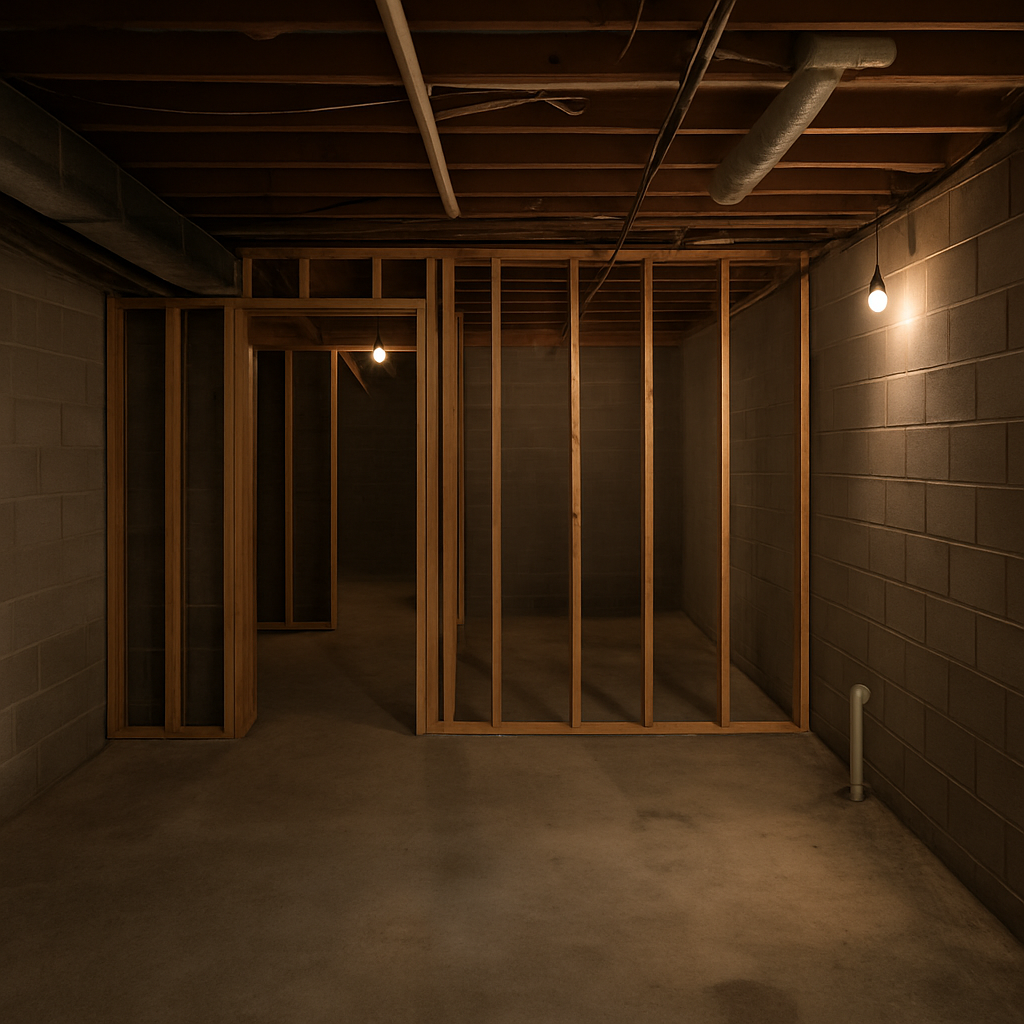
 Before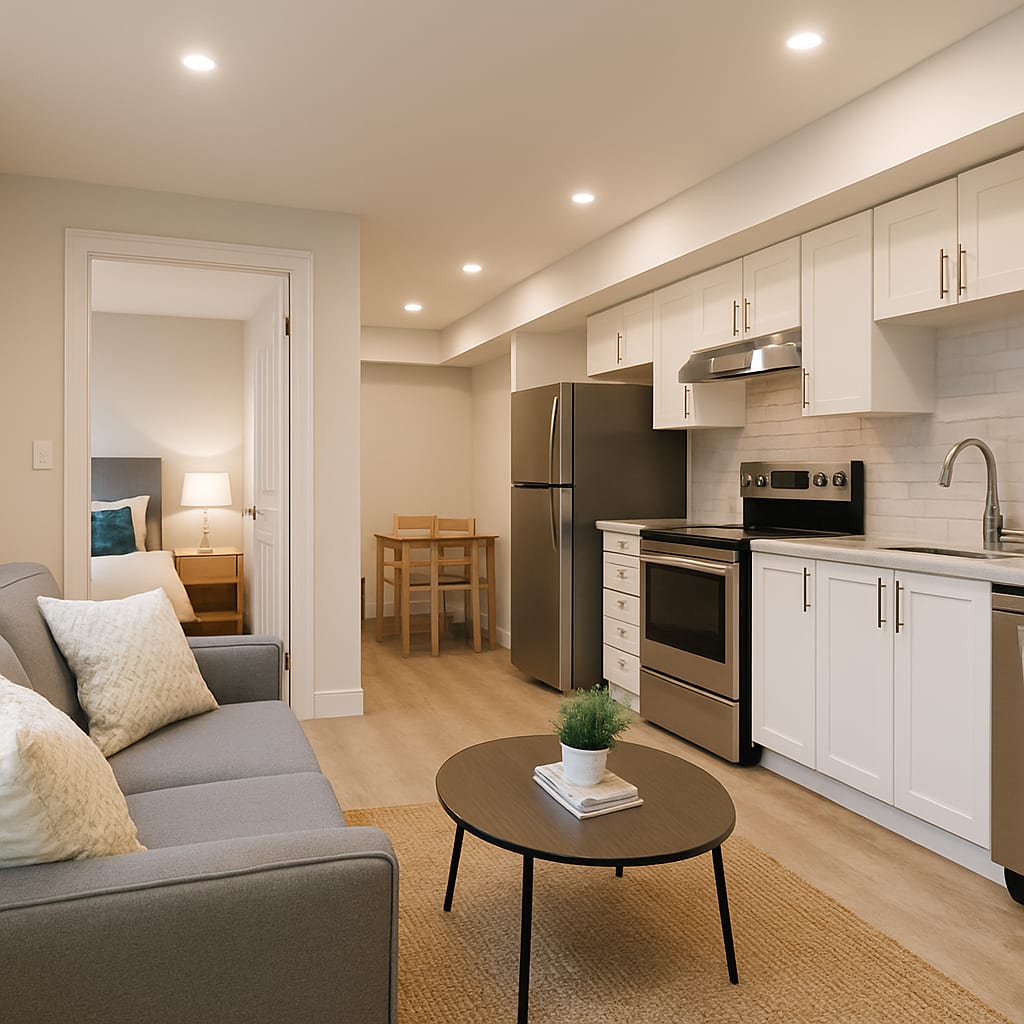
 After
Afterincrease resale value. The existing basement was partially finished but did not meet Ontario Building Code for ceiling height, egress or fire separation.MyAurora redesigned the layout with a bedroom, open living area, compact kitchen and 3-piece bath, added 45-minute fire separation, upgraded the HVAC, and coordinated permits plus all city and ESA inspections.
- Scope: Full legal secondary suite with separate entrance, kitchen, bath, laundry
- Investment range: approx. $65,000–$75,000
- Timeline: 14 weeks including design, permits and inspections
- Result: Rented shortly after completion at about $2,050/month
- Estimated payback: roughly 3–4 years based on local rents and low vacancy
Family Basement with Home Office & Media Room
Living Space

 Before
 After
After- Scope: Framing, insulation, drywall, LVP flooring, pot lights, storage, paint
- Investment range: approx. $28,000–$34,000
- Timeline: 6–7 weeks once permits and selections were finalized
- Result: Added a dedicated office plus family room, improving daily use of the home
- Value impact: Realtor estimated 60–70% cost recovery at resale in the current market
In-Law Basement Suite for Multi-Generational Living
In-Law Suite

 Before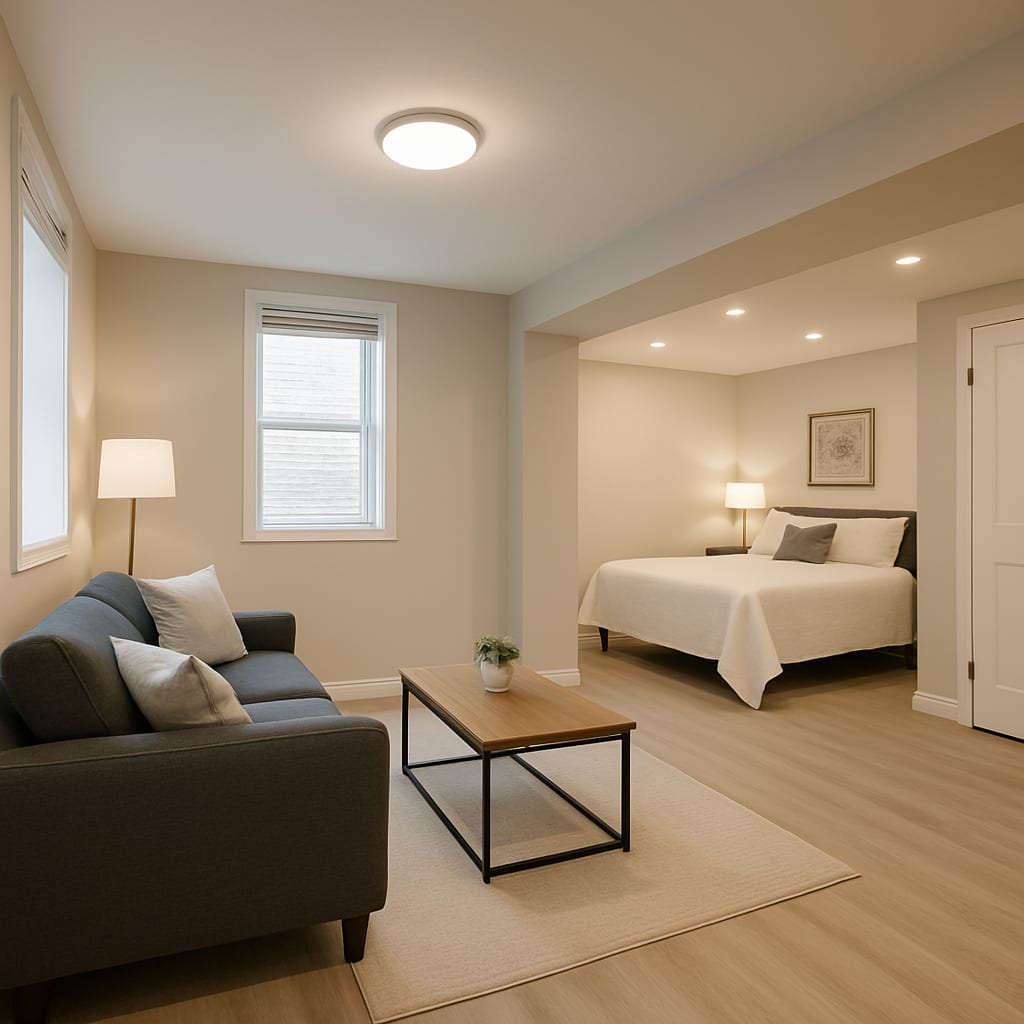
 After
After- Scope: Layout redesign, new bathroom, upgraded electrical, sound-dampening, finishes
- Investment range: approx. $48,000–$58,000
- Timeline: about 9–10 weeks from demolition to final walkthrough
- Result: Private in-law suite that keeps family close and can later be adapted for rental
- Value impact: Extra flexibility made the property more attractive to future buyers
Basement Refresh with Moisture Improvements
Refresh & Repair
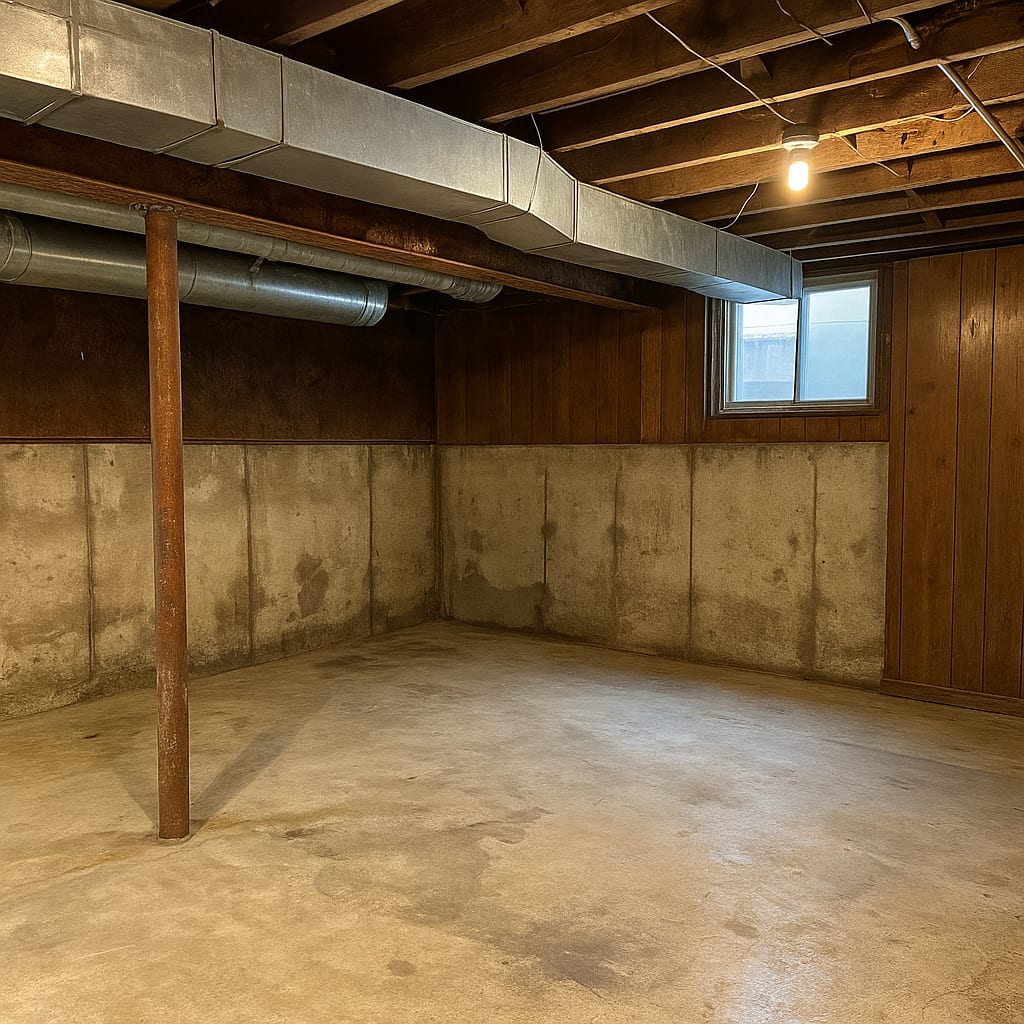
 Before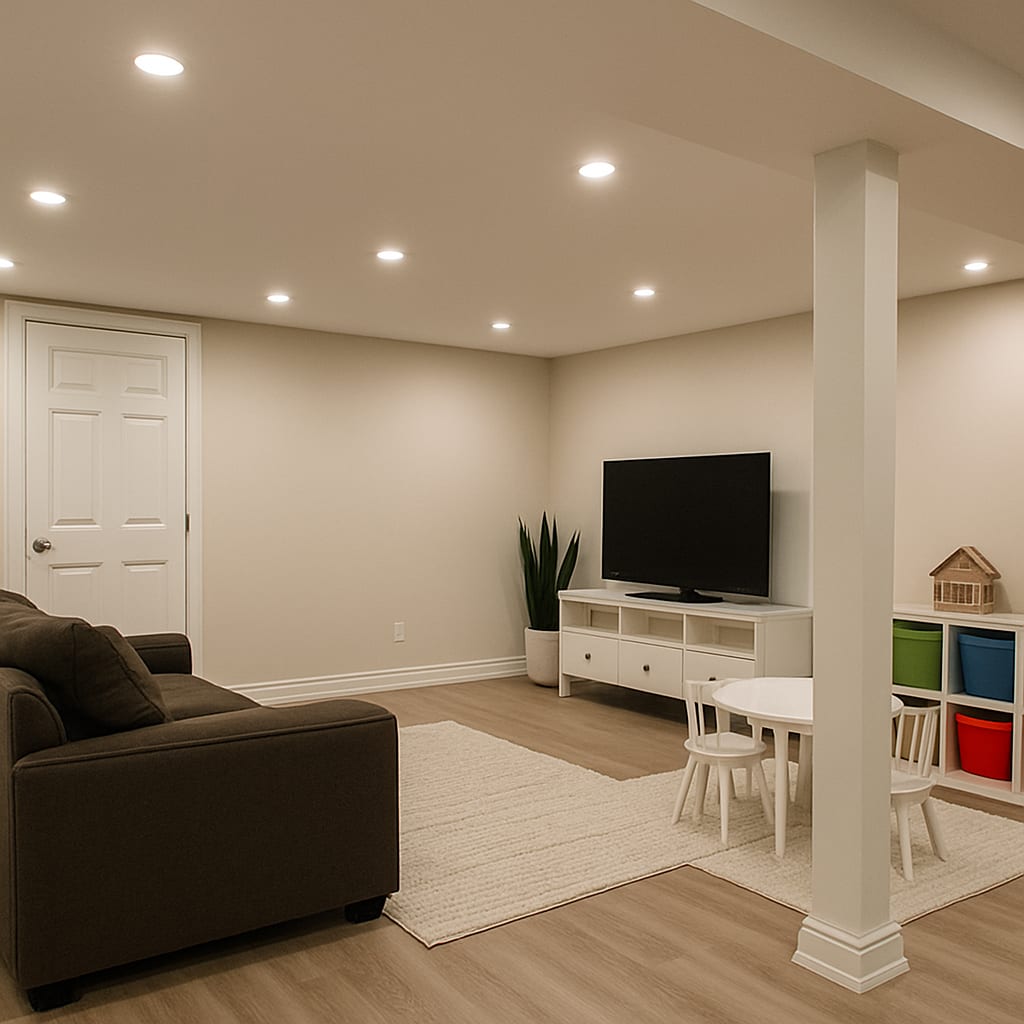
 After
AfterThis Acton home had a previously finished basement that felt cold, dark and slightly damp. The priority was to correct moisture-related issues and modernize the space without a full gut renovation.
MyAurora addressed minor water entry, added proper insulation and vapour barrier, upgraded lighting and replaced old carpet with durable vinyl plank flooring that performs better in basements.
- Scope: Targeted waterproofing, insulation improvements, lighting, new flooring, repaint
- Investment range: approx. $22,000–$28,000
- Timeline: 4–5 weeks with minimal disruption to the main floor
- Result: Dry, brighter basement that now works as a TV area and guest room
- Risk reduction: Fixing moisture before re-finishing helped protect the long-term investment
Planning a basement renovation or legal basement apartment in Oakville or Halton Hills raises a lot of important questions about cost, permits, Ontario Building Code requirements, rental rules and contractor risk. This FAQ brings together the most common questions homeowners ask MyAurora before finishing a basement or building a secondary suite in the west GTA.
Use these answers as a practical guide to understand the difference between a standard basement renovation and a fully legal secondary suite, how permits and inspections work, what to expect for timelines and pricing, and how to protect yourself with proper contracts, insurance and WSIB-covered crews. It is general information only, but it will help you have a more confident, informed conversation about your own basement project.
In Oakville and Halton Hills, most homeowners invest roughly $22,000–$35,000 to finish about 1,000 sq.ft of basement for family living, and $45,000–$80,000 to build a fully legal secondary suite with its own kitchen and bathroom. The total cost depends on factors such as existing framing and rough-ins, ceiling height, whether we are adding a bathroom, the quality of flooring and finishes, and any structural or waterproofing upgrades needed before closing walls.
At MyAurora we start with an on-site assessment in Oakville or Halton Hills, measure the space, identify code requirements and moisture risks, and then provide a clear written estimate broken down by trades and materials. This helps you understand exactly where your budget is going and what can be adjusted to match your goals.
A standard basement renovation is designed as extra living space for your family: TV room, playroom, office, gym or guest room. It focuses on comfort, storage, lighting, sound control and finishes that match the main floors. Permits may be required if we move plumbing, change structure or add new windows, but the space is not registered or marketed as a separate rental unit.
A legal basement apartment (secondary suite) is a self-contained unit with its own kitchen, bathroom and sleeping area, built to meet Ontario Building Code and local bylaws for egress, fire separation, smoke/CO alarms, ventilation and parking. It is designed to be rentable, insurable and mortgage-friendly, which is why legal suites typically cost more but also generate higher, more stable rental income and add more property value.
In most cases, yes. For a basic cosmetic refresh (paint, flooring, simple trim), permits may not be required. However, as soon as we move or add plumbing, electrical, structural walls, windows or exterior doors, your municipality will typically require building permits and inspections. For a legal secondary suite, permits are always required, and drawings must show fire separation, exits, ceiling heights, and mechanical design that meet current code.
MyAurora helps homeowners in Oakville and Halton Hills navigate this process by preparing permit-ready drawings, submitting applications to the city, responding to plan review comments, and coordinating all required inspections, including ESA electrical inspections.
Informal rentals do happen in the GTA, but a basement that is not built and approved as a legal secondary suite carries real risk. Insurance may not fully cover claims, your municipality may issue orders to comply, and there can be safety concerns around fire separation, exits and alarms. A finished basement that is used occasionally by a student, roommate or family member can provide some extra income, but it should not be marketed as a “legal apartment” unless it truly meets all code and bylaw requirements.
Our role is to explain the difference clearly, help you understand the implications for insurance and resale, and, if you choose the legal route, design and build a secondary suite that can be properly registered and defended from both a safety and compliance perspective.
For a typical family-focused basement renovation in Oakville or Halton Hills, the on-site construction usually takes about 4–8 weeks, depending on size, complexity and material lead times. Legal secondary suites are more involved and typically take about 10–16 weeks, including design, permit approval, inspections and construction.
We provide a realistic schedule with milestones (framing, rough-ins, insulation, drywall, finishes) and keep you updated as trades move through the project. Our goal is to minimize disruption to your household while still moving efficiently from start to finish.
Basements in Southern Ontario often have some level of moisture risk, so we start every project with a visual moisture assessment. We look for existing water stains, efflorescence, foundation cracks, musty odours, cold walls and floor drains. If we see any red flags, we may recommend additional waterproofing or drainage work before closing walls, such as interior drainage, crack injection, improved grading or upgrades to sump pumps and backwater valves.
Inside the renovation, we focus on using appropriate vapour barriers, insulation, framing details and ventilation so your finished basement is dry, comfortable and mold-resistant. The goal is to avoid “pretty finishes over damp walls” and instead build the basement as a long-term, healthy living space or rental unit.
For legal secondary suites and any structural or major mechanical changes, our work is designed and inspected to meet current Ontario Building Code (OBC) and local municipal bylaws. That includes ceiling height rules, fire-rated assemblies, smoke and CO alarm interconnection, proper exits, and adequate ventilation/heating. Electrical work is completed under ESA permits and inspections, and plumbing/HVAC follow current standards.
For simpler, non-structural renovations, full OBC approvals may not be triggered, but we still follow best practices for framing, electrical, lighting, insulation and sound control so your basement performs well and supports resale value in the future.
The best choice depends on your goals, budget and tolerance for permitting complexity. If your main objective is more family living space — TV room, playroom, home gym or office — a standard basement renovation is usually faster, more flexible and more cost-effective. If your priority is to create reliable rental income, improve mortgage affordability and maximize resale value, a legal secondary suite is often the better long-term investment, even though the initial cost is higher.
During our consultation, we can show you side-by-side numbers for each option (cost, timeline, estimated rent, estimated payback period and ROI) based on typical projects in Oakville and Halton Hills so you can make a confident, informed decision.
Our process is structured and transparent: it starts with an initial phone discussion and an on-site assessment, followed by design and layout recommendations, a detailed written estimate, and, where required, permit drawings and applications. Once permits are approved, we schedule trades, carry out demolition and framing, complete plumbing, electrical and HVAC rough-ins, pass inspections, then move into insulation, drywall, flooring, trim, painting and final fixtures.
At the end of the project we perform a walkthrough with you, address any touch-ups, and provide documentation such as permit records, inspection approvals and, where applicable, warranty details. The aim is a basement that is move-in ready, properly documented and easy to explain to future buyers, tenants and insurers.
Before work begins, we ask homeowners to clear personal belongings from the basement and stair area, identify where tools and materials can be stored, and discuss access (garage, side entrance, driveway use). We also confirm work hours, noise considerations, pets, children and any special instructions, such as keeping certain doors closed or using specific washrooms.
Clear communication before we start helps the project run smoothly, reduces stress for your family and allows our team to focus on high-quality workmanship while respecting your home and privacy.
Our payment structure is milestone-based to protect both the homeowner and the contractor. A typical schedule is:
20% at contract signing to reserve your spot and cover design and planning time,
35% after permits are issued (where required) and we are ready to start construction,
35% after major inspections and rough-ins are passed, and the final 10% only when the project is substantially complete and you have done a walkthrough. This way, payments are tied to visible progress and approved inspections, not just calendar dates.
This approach is widely recommended in the renovation industry because it reduces the risk of overpaying early, encourages on-time performance and ensures that both parties stay accountable throughout the project.
Large upfront payments can put homeowners in a vulnerable position if the contractor becomes slow, unresponsive or fails to complete the job. By using a staged payment schedule, MyAurora aligns our compensation with real progress on your basement. You see work being completed, inspections being passed and materials installed before releasing each stage payment.
This creates a healthier, more transparent working relationship and is a key trust factor for many of our clients in Oakville and Halton Hills who may have heard negative stories about renovations that went wrong.
We typically accept payments by standard Canadian banking methods such as e-transfer and other commonly used, traceable options. Every payment is receipted and linked to a specific milestone on your quote or contract. This documentation is important for your records, for potential audits, and for future resale or refinancing when you may want to show evidence of professional work and investment in your home.
We provide a written workmanship warranty that covers the labour portion of your basement project for a defined period after completion (details are specified in your contract). This typically includes items such as framing, drywall, trim installation and general finish carpentry, provided the space is used under normal residential conditions and has not been altered by third parties.
Manufacturer warranties on products such as flooring, fixtures and paint also apply, and we can help you understand how to register or maintain those products so you receive the full benefit of the coverage.
In general, the workmanship warranty covers defects directly related to how the work was installed — for example, nail pops, cracking in new drywall joints or trim that separates due to normal settling. It does not usually cover damage caused by external factors such as new leaks or flooding, abuse or misuse, unauthorized modifications, or building movement beyond normal settlement.
During the handover, we explain how to care for your new basement, what to watch for, and how to contact us if you notice an issue that may be warranty-related. The goal is a fair, transparent approach where genuine workmanship issues are addressed promptly and documented for your peace of mind.
If you notice a concern after completion — for example a small crack, a door that needs adjustment or an area that may have been missed — you can reach out directly with photos and a brief description. We review whether it falls under workmanship warranty or regular maintenance, then schedule a service visit if needed. Because the entire project was permitted and inspected, we have a clear record of what was done, which makes follow-up faster and more straightforward.
This is a major difference between hiring a properly insured, WSIB-covered renovation company and an uninsured handyman. If an uninsured person leaves you with damage, safety issues or failed inspections, you may have to pay a professional contractor to redo much of the work. Starting with a documented, warrantied project helps protect both your investment and your sanity.
A professionally finished basement or legal basement apartment in Oakville or Halton Hills
will usually increase both your market value and, over time, your property tax assessment.
Real buyers in the GTA often pay more for homes with extra living space, home offices, gyms, media rooms or
legal secondary suites that generate rental income. That higher resale value is positive for your equity,
but it can also lead the municipal assessment authority to reassess the property at a higher value in the future.
No contractor or realtor can guarantee exactly how much your value or assessment will change, because it depends on
current market conditions, quality of workmanship, permits, documentation and buyer demand. In general, a well-designed,
properly permitted basement renovation or legal suite is viewed as a strong investment, especially in high-demand areas
like Oakville and Halton Hills where extra living space and rental potential are highly valued.
This information is general and not legal or tax advice. For details about your specific assessment and taxes,
you should speak with your municipality, MPAC and a qualified accountant or lawyer.
Homeowners sometimes assume that if they finish a basement quietly, the city will never know. In reality,
municipalities in Ontario can discover unpermitted basement renovations in several ways:
neighbour complaints, visible exterior changes (new windows, separate entrances, extra parking),
fire or emergency calls, insurance claims, MLS real estate listings that show a suite, rental advertisements,
or an appraiser’s report during refinancing or sale that flags additional finished space.
If an inspector suspects unpermitted work, they may require you to prove that the basement complies with
the Ontario Building Code or bring it up to current standards. In serious cases, this can mean opening walls,
correcting electrical or structural issues, and applying for permits after the fact, which is usually more expensive than
doing it the right way from the beginning.
MyAurora always recommends following local permit rules for major basement renovations, especially for
legal basement apartments and secondary suites.
Cities do not monitor every home daily, but they have many indirect ways to become aware of
basement rentals. Common triggers include parking or noise complaints from neighbours,
online rental ads, calls to bylaw or fire departments, tenant complaints about safety or conditions,
and information shared during licensing, inspections or insurance claims. Sometimes a lender or appraiser will
also report that a property appears to be operating a secondary suite.
If the basement is being rented as an apartment but is not a legal secondary suite,
you may be ordered to stop renting, complete upgrades to meet code, or go through a formal registration process.
This is why building a legal, permit-approved basement apartment from the start is usually safer for both
homeowners and tenants in Oakville, Halton Hills and the rest of the GTA.
City staff and inspectors cannot usually enter a private home in Ontario “anytime they want” without
proper authority. However, if there is a formal complaint, safety concern, or active permit,
they may be allowed to inspect areas related to the issue in order to enforce building code, fire code
or bylaw requirements. In serious safety situations, such as suspected structural failure or life-safety risks,
authorities may have broader powers to inspect.
When you apply for permits for a basement renovation or legal secondary suite, you agree to have
inspectors review work at specific stages (framing, insulation, electrical, plumbing, final). This is part of the
normal process and is designed to protect you as a homeowner by confirming that the work meets minimum safety standards.
If you have concerns about inspection powers or privacy, it is always best to speak directly with your local
building department or a qualified lawyer familiar with Ontario construction and property law.
A lien on a house is a legal claim registered against your property by someone who says they are owed money
for work or materials, such as a contractor, subcontractor or supplier. In Ontario, the construction lien process is
governed by specific legislation, and it gives certain trades and suppliers a way to secure payment by registering a
claim against the property title if they are not paid.
If you complete a basement renovation or legal basement apartment and do not pay the contractor or
subcontractors according to the contract, they may be able to register a lien within the time limits set by the law.
A valid lien can complicate refinancing or selling the home until the claim is resolved, negotiated or removed.
Because lien rules and deadlines are technical and time-sensitive, homeowners should seek advice from a qualified
Ontario construction lawyer if a lien is threatened or registered against their property.
To remove a construction lien from your home, the underlying payment dispute must be resolved or
addressed through the legal process. Common approaches include negotiating a settlement with the contractor,
paying the agreed amount, or posting security or funds into court while the dispute is resolved. Once a lien is
satisfied, expired, or cleared by a court order, it can be discharged from title so that your property record is clean.
Every situation is different, especially when multiple trades and invoices are involved. Because liens in Ontario are
governed by strict rules and timelines, it is important to keep all contracts, change orders, receipts and payment records
for your basement project and to speak to a lawyer quickly if you receive a lien claim or written notice.
If you refuse to pay your contractor for a basement renovation or legal suite without a valid reason under the contract,
several things can happen. The contractor may stop work, pursue collection, register a construction lien, or start legal
action to recover unpaid invoices. This can delay your project, increase legal costs and create stress for both sides.
If you believe the work is defective or incomplete, you should document the issues with photos and written notes,
review the contract, and communicate concerns in writing. In many cases, problems can be resolved through
a written agreement, finishing list or partial holdback rather than simply stopping payment. For serious disputes,
consulting a lawyer who understands Ontario construction contracts is the safest approach.
If you are not satisfied with the quality of your basement renovation, the first step is to document everything clearly:
take photos, list specific items you consider defective or unfinished, and refer back to your written contract and
approved drawings. Then share this list with your contractor in writing and give them a reasonable chance to correct
the issues under their workmanship warranty or as part of the final completion stage.
Professional renovation companies expect a “deficiency list” at the end of a project and will schedule follow-up visits
to address items such as paint touch-ups, trim adjustments or minor drywall repairs. If the contractor refuses to fix serious
issues that clearly fall below the standard promised in the contract, you may need to involve a third-party inspector,
mediator or lawyer to protect your rights and decide on next steps.
A contractor who insists on cash-only payments and refuses traceable methods such as e-transfer or bank payments should be treated with caution. While small cash amounts are common for minor jobs, relying only on cash for a major basement renovation or legal secondary suite can create problems for you as the homeowner: you have limited proof of payment, it may raise tax and insurance questions, and it can be harder to enforce the contract if a dispute arises.
For large renovation projects, it is safer to work with a licensed, insured and WSIB-covered contractor who provides written contracts, detailed invoices and receipts for each payment. This documentation is extremely valuable for warranty claims, resale, refinancing and any legal action that might be needed later.
Paying in cash does not automatically take away your right to seek legal remedies, but it can make your case more difficult to prove. Courts and lawyers rely on evidence: contracts, emails, text messages, photos, invoices and payment records. If most payments were made in unrecorded cash with no receipts, it becomes harder to show exactly how much you paid and what work was promised for that amount.
If a contractor has left your basement unfinished or damaged after being paid, collect every piece of evidence you have: written agreements, messages, before-and-after photos, witness statements and any bank records that show cash withdrawals close to the dates of payment. Then speak to a lawyer as soon as possible to understand your options, which may include legal action, reporting to consumer protection agencies or working with a new, reputable contractor to safely complete the job.
Nothing in this FAQ is legal advice. For personal advice about liens, unpaid work, cash payments or contractor disputes in Ontario, always consult a qualified lawyer or legal clinic.
Still have questions about your own basement renovation or legal basement conversion in Oakville, Halton Hills or the surrounding west GTA? Every home and budget is different, and the best way to get accurate numbers is to review your space in person.
You can request a free, no-obligation basement assessment with MyAurora and we’ll walk you through design options, permit requirements, rental potential and a clear payment schedule for your project.
Call +1 (437) 985-2935 or email info@myauroras.com to schedule your visit.
Questions to Ask Before Hiring a Basement Renovation Contractor
Before you hire anyone to finish your basement or build a legal secondary suite in Oakville or Halton Hills, it is important to ask the right questions. A good basement renovation contractor should clearly explain how they handle design, permits, structural work, waterproofing, inspections and safety so your project meets Ontario Building Code requirements and adds long-term value to your home.
How will you assess my basement and protect my home?
Ask how the contractor will inspect your existing basement before starting work. A professional renovation company should review ceiling heights, existing plumbing and electrical, moisture issues, insulation, and structural elements. They should also explain how they will protect finished areas of your home with floor coverings, dust control, and safe access while work is underway.
Do you handle design, permits and Ontario Building Code compliance?
For both finished basements and legal basement apartments, design and permitting are critical. Ask if the contractor prepares permit drawings, submits applications to the city, and responds to comments from building officials. Confirm that they understand OBC requirements for fire separation, egress windows or exits, ceiling heights, ventilation, and smoke/CO alarms in secondary suites.
How do you address moisture, insulation and sound control?
A basement that looks nice but still feels damp or cold will not perform well over time. Ask what steps they take to manage moisture (such as vapour barriers, drainage checks or sump systems), what insulation and wall assemblies they use, and how they improve soundproofing between the basement and main floor. These details are especially important in rental suites and multi-generational homes.
Who handles plumbing, electrical and HVAC – and are they licensed?
Basement renovations in Oakville and Halton Hills often involve moving plumbing, adding a bathroom, running new electrical circuits and updating HVAC. Confirm that licensed plumbers and electricians will complete the work, that electrical is inspected by ESA, and that any HVAC changes are reviewed for proper airflow and comfort in both the basement and main floors.
Important questions to ask before hiring a basement contractor:
- Are you licensed, insured and WSIB-covered for basement renovation work in Ontario?
- Who is responsible if a worker gets injured or if something in my home is damaged during the project?
- Do you regularly complete finished basements and legal secondary suites in Oakville and Halton Hills?
- Will you provide detailed, written quotes that list scope, materials, permits and timelines?
- How do you handle change orders if I decide to add or adjust items during the project?
- Can you show examples or references from recent basement projects in my area?
- Who will be on site each day – employees, subcontractors, or a mix of both?
What should I do after receiving basement renovation quotes?
When you compare basement renovation quotes, do more than just look at the total price. Review how each contractor handles design, permits, inspections, materials, and clean-up. Check whether the quote clearly mentions fire separation, egress, electrical inspections, and moisture control. Look at online reviews and speak with past clients to confirm that the company’s promises match their actual performance. Be cautious of very low quotes from uninsured handymen — if something goes wrong, they can simply disappear and leave you dealing with damage, denied insurance claims and the full cost of fixing the work.
DIY vs Handyman vs Professional Basement Renovation Company
Not sure whether to finish the basement yourself, hire a general handyman, or work with a dedicated basement renovation company? This comparison shows the typical differences in safety, insurance coverage, code compliance and long-term value for homeowners in Oakville, Halton Hills and the west GTA.
| Criteria | DIY Basement | General Handyman | Professional Basement Contractor |
|---|---|---|---|
| Design & Code Knowledge | Limited experience with Ontario Building Code, egress, fire separation and permits. | Some experience, but often no formal design or permit process for secondary suites. | Understands OBC requirements and designs basements and legal suites to meet local bylaws. |
| Permits & Inspections | Homeowner is responsible for drawings, permits and scheduling inspections. | May avoid permits or leave permits up to you, increasing risk and liability. | Prepares drawings, obtains permits and coordinates city and ESA inspections for you. |
| Waterproofing & Structure | High risk of missing moisture, insulation and structural issues behind walls. | Basic fixes only; complex problems may be missed or temporarily covered. | Assesses moisture, insulation and structural conditions before closing walls. |
| Trades & Equipment | Limited tools and no network of licensed trades for plumbing, HVAC or electrical. | May use some licensed trades, but coverage and coordination can be inconsistent. | Works with licensed plumbers, electricians and HVAC specialists on every project. |
| Insurance, WSIB & Liability | You carry most of the risk. If someone is injured or damage occurs, your own insurance may not cover unpermitted or non-professional work, leaving you responsible for costs. | Many handymen do not carry full liability insurance or WSIB coverage. If something goes wrong or serious damage is done, they can simply walk away, leaving you in limbo with no protection. A professional contractor will often have to undo and redo the work, and that can cost nearly twice as much as doing it properly the first time. | Licensed, insured and WSIB-covered crews. Written contracts clearly outline responsibility if something goes wrong, and the company can coordinate repairs or warranty work instead of leaving you to deal with damage or insurance issues on your own. |
| Speed & Coordination | Work is done evenings and weekends, often stretching over months. | Timelines depend on availability; projects can stall if other jobs come up. | Planned schedule with coordinated trades, regular updates and defined milestones. |
| Quality, Safety & Value | Finish may look acceptable, but hidden issues can hurt future resale or rental plans. | Variable quality; lack of documentation and permits can impact insurance, appraisals and make it more expensive when a professional needs to correct and rebuild the work later. | Documented, code-compliant work, better resale value, lower risk, and proper setup for legal rental suites or future buyers who want a safe, inspected basement. |
For most homeowners, especially those planning a legal basement apartment, hiring a professional basement renovation company is the safest and most cost-effective option. You get proper design, permits, inspections, insurance and WSIB-covered crews so your new space in Oakville or Halton Hills is comfortable, legal and protected — without the risk of unfinished projects, disappearing handymen or paying again to fix work that was not done properly the first time.
Book Your Basement Consultation
Basement Renovation Reviews from Oakville & Halton Hills Homeowners
Homeowners in Oakville, Halton Hills and the west GTA choose MyAurora for professionally finished basements and fully legal secondary suites. These reviews highlight real projects where our team designed, permitted and built basements that added living space, created rental income and increased long-term property value.
We started with an unfinished basement in Glen Abbey and wanted a bright family room plus a safe play zone for the kids. MyAurora planned the layout, improved insulation and lighting, and tied the finishes into our main floor. The new basement feels like part of the house instead of a dark storage area, and it is now the space we use the most in our Oakville home.
We needed a legal basement apartment in Georgetown to help with the mortgage. The MyAurora team explained the requirements for fire separation, egress windows and ceiling heights, prepared the permit drawings, and coordinated all city and ESA inspections. The legal suite was rented within a week of completion and the income now covers a large portion of our monthly housing costs.
Working from home, I wanted a quiet office and a small gym in the basement. MyAurora redesigned the space, added sound-dampening and storage, and installed a rubber-floor gym area with enough room for equipment. The finished basement office in River Oaks feels professional and means I no longer have to commute to a gym or rent external office space.
We converted our older basement in Bronte into a comfortable in-law suite for my parents. MyAurora designed a bedroom, living area and 3-piece bathroom and made sure everything followed safety and code requirements. Having a private, accessible suite in the basement has made multi-generational living much easier and has also increased the value of our Oakville property.
We wanted a cozy entertainment space with a media wall and bar area for hosting friends. MyAurora helped us plan lighting, sound and built-in storage so the basement feels tailored to the way we use it. Guests always comment that the entertainment basement feels like a professionally designed lounge, not just a basic finished lower level.
Our basement in Acton felt dark, damp and dated. The MyAurora crew dealt with moisture concerns, upgraded insulation and lighting, and replaced the old flooring with something warmer and more durable. The refreshed basement is now dry, bright and comfortable enough to use as a TV area and guest room whenever family visits Halton Hills.
Basement Renovations Made Easy
Compare the usual renovation experience with the MyAurora way — clear communication, clean workmanship, and a fully managed process from first design ideas to final walkthrough.
Why Choose MyAurora?
- Management problems and unclear communication
- Surprise price changes and vague quotes
- You’re left to source and coordinate all materials
- Little or no design guidance for layout and finishes
- Messy job site and unprofessional labour
- Start-to-finish project coordination and one main contact
- Upfront, itemized proposal with clear scope and timeline
- Materials sourced, delivered, and managed for you
- Design support for layout, tiles, fixtures, and colours
- Clean, respectful, insured contractors working to Ontario code
Basement Renovation Payment Structure
To protect homeowners in Oakville, Halton Hills and the GTA, MyAurora uses a clear, milestone-based payment schedule for basement renovations and legal secondary suites. Payments are linked to real progress, so you are never paying far ahead of the work.
- 20% – Contract signing
This initial payment reserves your project in our schedule and covers design time, site measurements and preparation of permit-ready drawings for your basement renovation or legal suite. - 35% – After building permit is issued
Once the city issues the building permit for your home in Oakville or Halton Hills, we collect the second payment. This confirms that your project is approved to move forward and allows us to mobilize trades and order materials. - 35% – After major inspections are passed
The third payment is due when the main construction work and rough-ins are complete and required city and ESA inspections are passed. This typically includes framing, plumbing, HVAC, electrical and insulation stages. - 10% – On completion & final homeowner approval
The final payment is due only after the basement is fully finished, cleaned and ready to use. We complete a walkthrough with you, list any minor touch-ups, and ensure you are satisfied before final sign-off.
This payment structure provides a transparent, fair approach for basement renovation projects in Oakville and Halton Hills, aligning each payment with a clear construction milestone and verified progress.
Basement Renovation Service Areas – Oakville, Halton Hills & West GTA
MyAurora focuses on basement renovations and legal secondary suites in Oakville and Halton Hills, including popular neighbourhoods such as River Oaks, Glen Abbey, Bronte, Kerr Village, Georgetown and Acton. We also serve nearby west GTA cities like Mississauga, Milton, Burlington and select parts of Toronto and the surrounding area.
Our team designs and builds finished basements, family rooms, home offices and legal basement apartments that meet Ontario Building Code requirements. From layout planning and framing to drywall, flooring and trim, we focus on clean workmanship, proper insulation, lighting and moisture control so your basement feels like a natural extension of your home and adds long-term value to your property.
WHY HOMEOWNERS TRUST MYAURORA FOR BASEMENT RENOVATIONS
- Licensed & insured: Professional basement renovation crews you can trust in Oakville, Halton Hills and the west GTA.
- WSIB-covered teams: Safe, compliant job sites with full worker coverage for every finished basement and legal secondary suite project.
- Code-compliant work: Basements and legal basement apartments designed to meet Ontario Building Code and local municipal requirements.
- Transparent pricing: Clear written basement renovation quotes before any work begins – no hidden fees or surprise add-ons.
- Workmanship warranties: We stand behind our framing, drywall, flooring and finish work with written workmanship guarantees.
- Clean, respectful process: Scheduled work, regular updates and careful daily clean-up so your home stays as livable as possible during the project.