

Fence Installation, Repair & Staining
NEW FENCE BUILD / REPLACEMENT
You need a new fence install or full replacement that boosts privacy, security, and curb appeal. We build wood privacy fences (pressure-treated or cedar), modern horizontal fences, chain link, aluminum/metal, and composite, with proper post setting, straight lines, and clean gate alignment—ideal for homes in Oakville, Burlington, Milton, and Richmond Hill.
REPAIRS, LEAN FIXES & GATES
Your fence is leaning, wobbling, or falling apart—broken panels, rotten posts, loose rails, or a gate that won’t close. We handle post replacement, panel/section repair, reinforcement, and gate hardware upgrades to restore strength and function, while keeping the repair looking consistent with the existing fence.
STAINING / SEALING FOR LONG LIFE
You want your wood fence to stay rich in color and last longer through Ontario weather. We provide fence staining and sealing with the right prep—power washing, spot sanding, and coating removal when needed—so the finish bonds well, reduces graying, and helps protect against moisture, sun, and peeling.
CLEAR PROCESS + LOCAL EXPERTISE
You want a smooth project with clear steps, realistic timelines, and a clean worksite from start to finish. We guide you through material choices, height/style options, gate planning, access considerations, and removal/disposal—so your fence project in the GTA is straightforward, well-managed, and built to last.
Popular New Fence Types in the GTA
Fence rebuild / resurfacing (replace old boards) listed separately
Horizontal Fence
$65–$120 / linear ft


- Best for: modern curb appeal and “designer” exterior look—great for front-facing areas.
- Common use: front-yard statement fences, patios, and premium backyard upgrades across the GTA.
- Materials: wood or composite-style boards with stronger framing to keep lines straight over time.
- Maintenance: sealing/staining recommended; tighter tolerances mean better results with quality install.
- Upgrades: hidden fasteners, clean trim details, post caps, lighting, and custom gate matching.
- Estimate: use our Fence Estimates to compare styles and upgrades.
Chain Link Fence
$25–$55 / linear ft


- Best for: budget-friendly boundaries, pet containment, and clear sight lines (security + visibility).
- Common use: side yards, back lanes, commercial edges, and quick perimeter solutions.
- Materials: galvanized or black vinyl-coated options with durable posts, top rail, and tensioning.
- Maintenance: very low—built to last with minimal upkeep compared to wood fencing.
- Upgrades: privacy slats, stronger terminal posts, wind-screen options, and lockable gates.
- Estimate: use our Fence Estimates to price length + gates fast.
Aluminum Fence
$85–$170 / linear ft
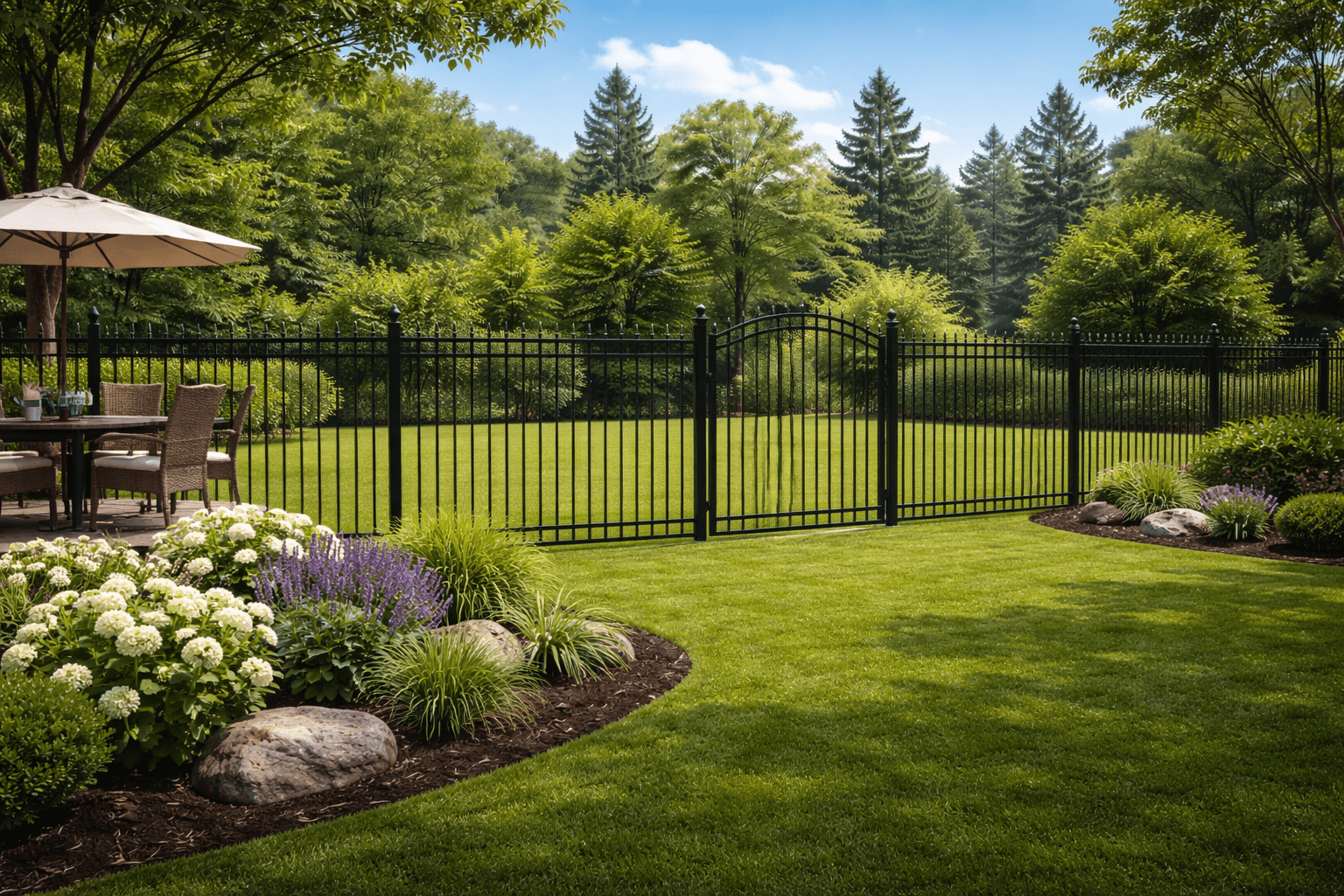

- Best for: clean, upscale curb appeal with long life and near-zero maintenance.
- Common use: front yards, side boundaries, and pool-style looks where visibility matters.
- Materials: powder-coated metal panels with strong posts and neat, consistent picket spacing.
- Maintenance: rust-resistant finish; simple wash-down is usually enough for years.
- Upgrades: matching gates, decorative top styles, reinforced posts, and latch/security hardware.
- Estimate: use our Fence Estimates to compare metal vs wood options.
Pool / Safety Fence
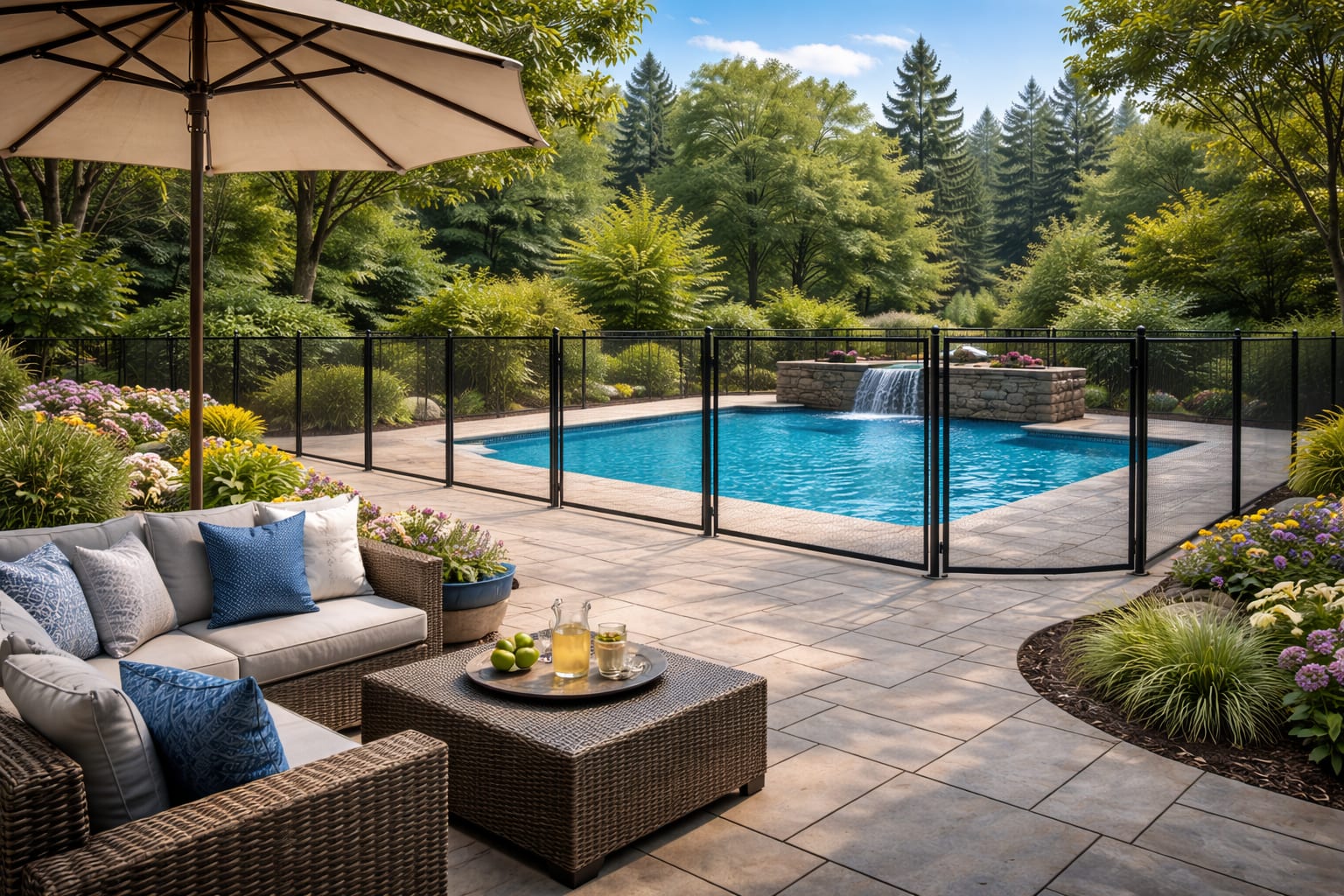

- Best for: safety-first perimeter control for pools, hot tubs, and child/pet protection zones.
- Common use: pool enclosures, backyard safety partitions, and restricted access areas.
- Materials: aluminum/metal styles are common; gate alignment and latch planning are critical.
- Compliance focus: we plan layout and gate hardware to align with typical safety requirements (final rules vary by area).
- Upgrades: self-closing hinges, lockable latches, durable hardware kits, and matching safety gates.
- Estimate: use our Fence Estimates to price length + safety gate counts.
Access Points
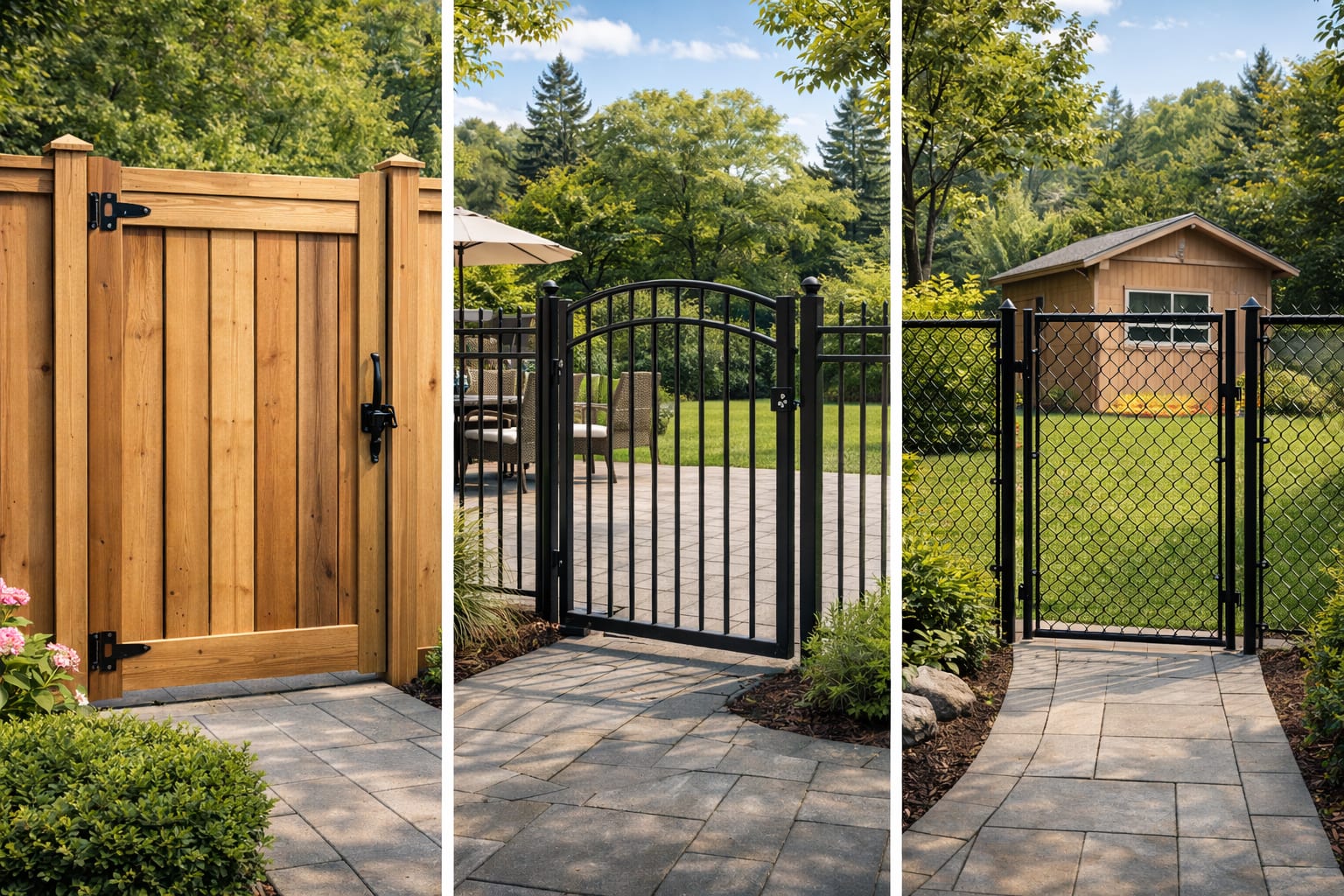

- Best for: secure, daily-use entry points—driveway access, backyard access, or side-gate control.
- Common use: single gates (3–4 ft) and double gates (6–10 ft) for bins, equipment, and wide access.
- Build quality: anti-sag bracing, reinforced framing, and straight swing alignment for smooth operation.
- Security: heavy-duty hinges/latches, lockable options, and hardware that reduces sag over time.
- Upgrades: premium gate hardware kits, matching materials/styles, and privacy infill options.
- Estimate: add gate counts inside our Fence Estimates for instant pricing range.
Wood Privacy Fence
$45–$85 / linear ft
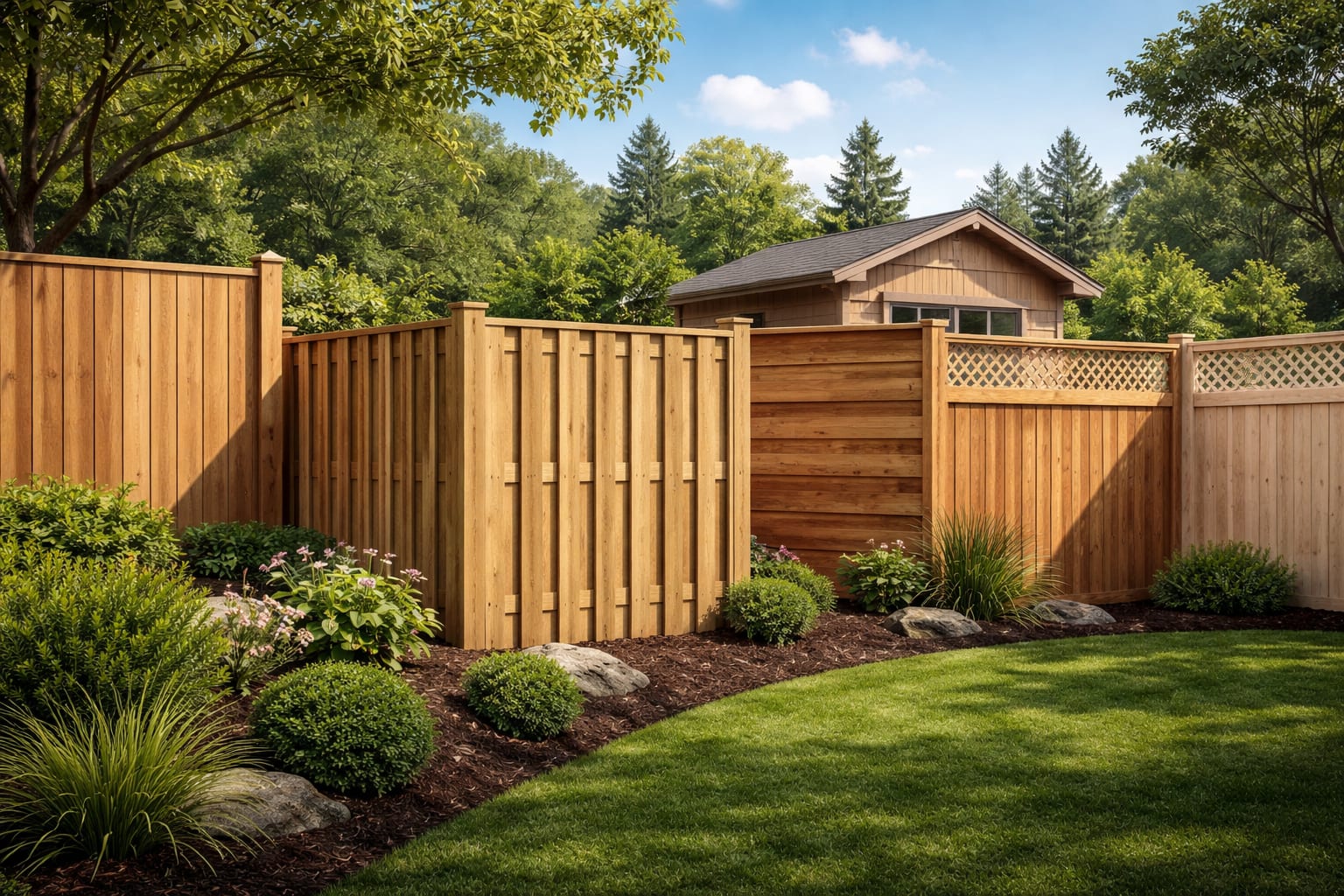

- Best for: backyard privacy, noise reduction, and creating a “closed” feel for families and pets.
- Common use: side & back property lines in Oakville, Burlington, Milton, Richmond Hill, and GTA homes.
- Materials: pressure-treated (value) or cedar (premium look) with clean straight lines and consistent spacing.
- Maintenance: longer lifespan with sealing/staining; helps reduce warping, cracking, and early graying.
- Upgrades: trim/cap, lattice top, 6×6 posts for stability, decorative caps, and matching gates.
- Estimate: use our Fence Estimates for a fast measurement-based range.
What’s included in our fence projects
Measurements and layout
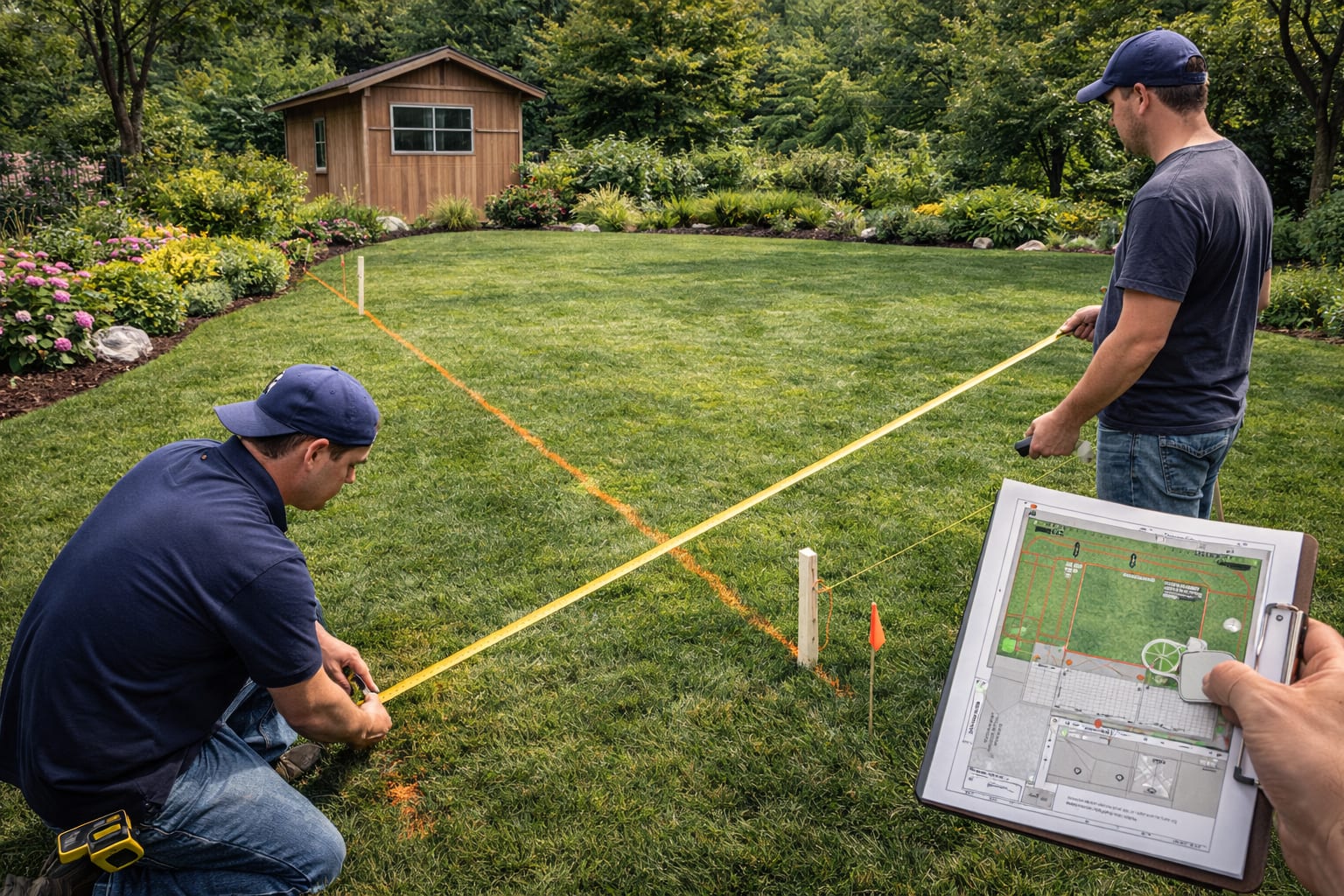

Every fence installation, repair, or staining job starts with accurate measurements and a clean layout plan—so your fence line is straight, gates fit properly, and the estimate matches real site conditions across Oakville, Burlington, Milton, Richmond Hill, and nearby GTA areas.
- Fence line check: confirm run length, corners, transitions, and direction changes.
- Gate planning: set gate location, swing clearance, and access needs (bins, mower, vehicles).
- Height & purpose: align design with privacy, safety, pets/kids, or curb appeal goals.
- Site notes: identify slope, tight access, roots/rocks, and obstacles that affect build time.
- Materials forecast: calculate posts, panels/pickets, hardware, and staining area (if selected).
Site preparation
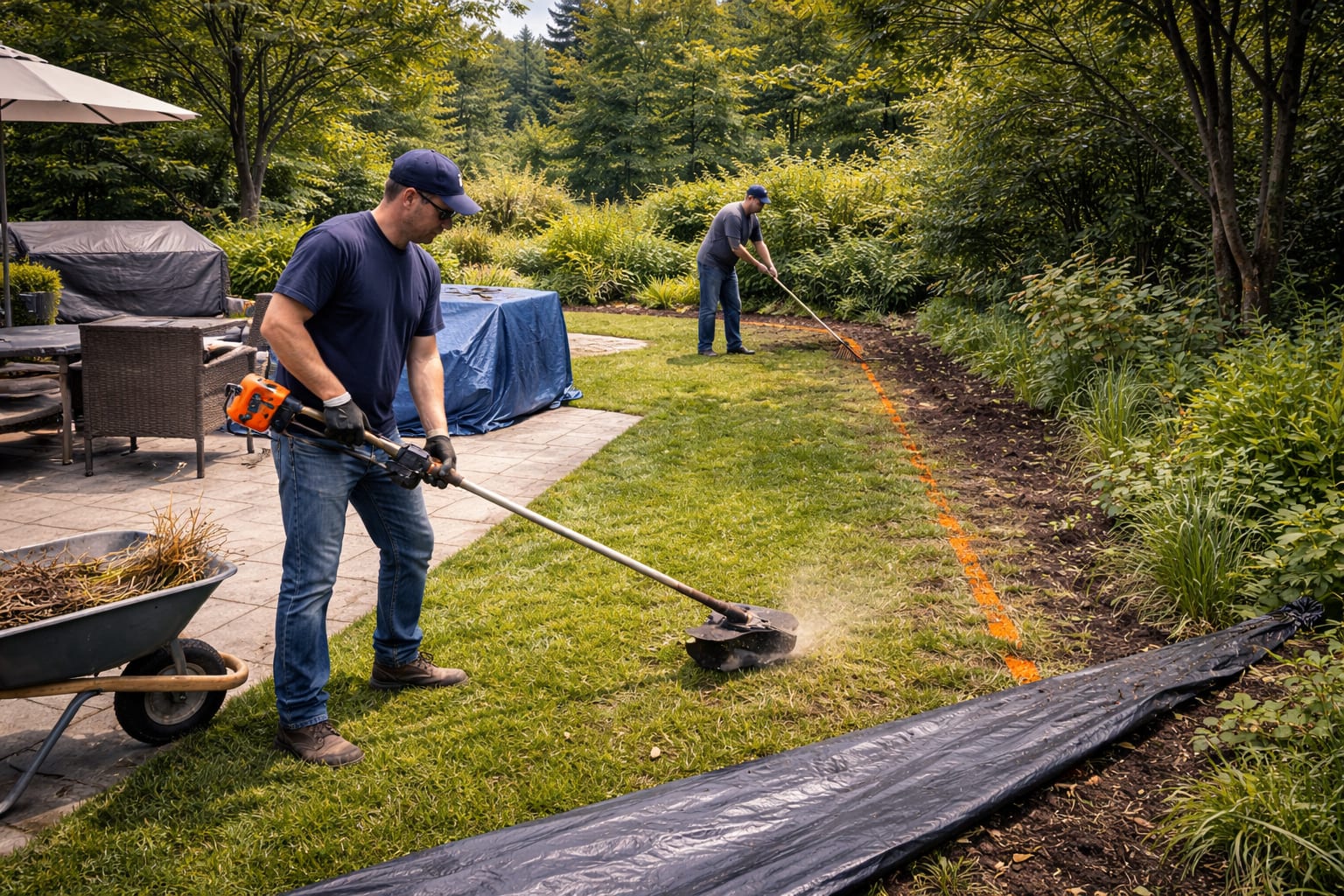

Professional site preparation protects your landscaping and creates a clean working path for faster, safer fence installation. Good prep also improves post alignment and helps your fence look finished—not rushed.
- Work zone setup: plan access routes for materials, tools, and debris removal.
- Fence path clearing: basic clearing along the line to reduce delays and rework.
- Surface protection: protect nearby grass, gardens, patios, and hardscapes where possible.
- Grade awareness: note slopes and low spots that impact fence height consistency.
- Jobsite organization: staging materials for efficient build sequence and cleaner results.
- Estimate link: compare options using the Fence Calculator before booking.
Posts and stability
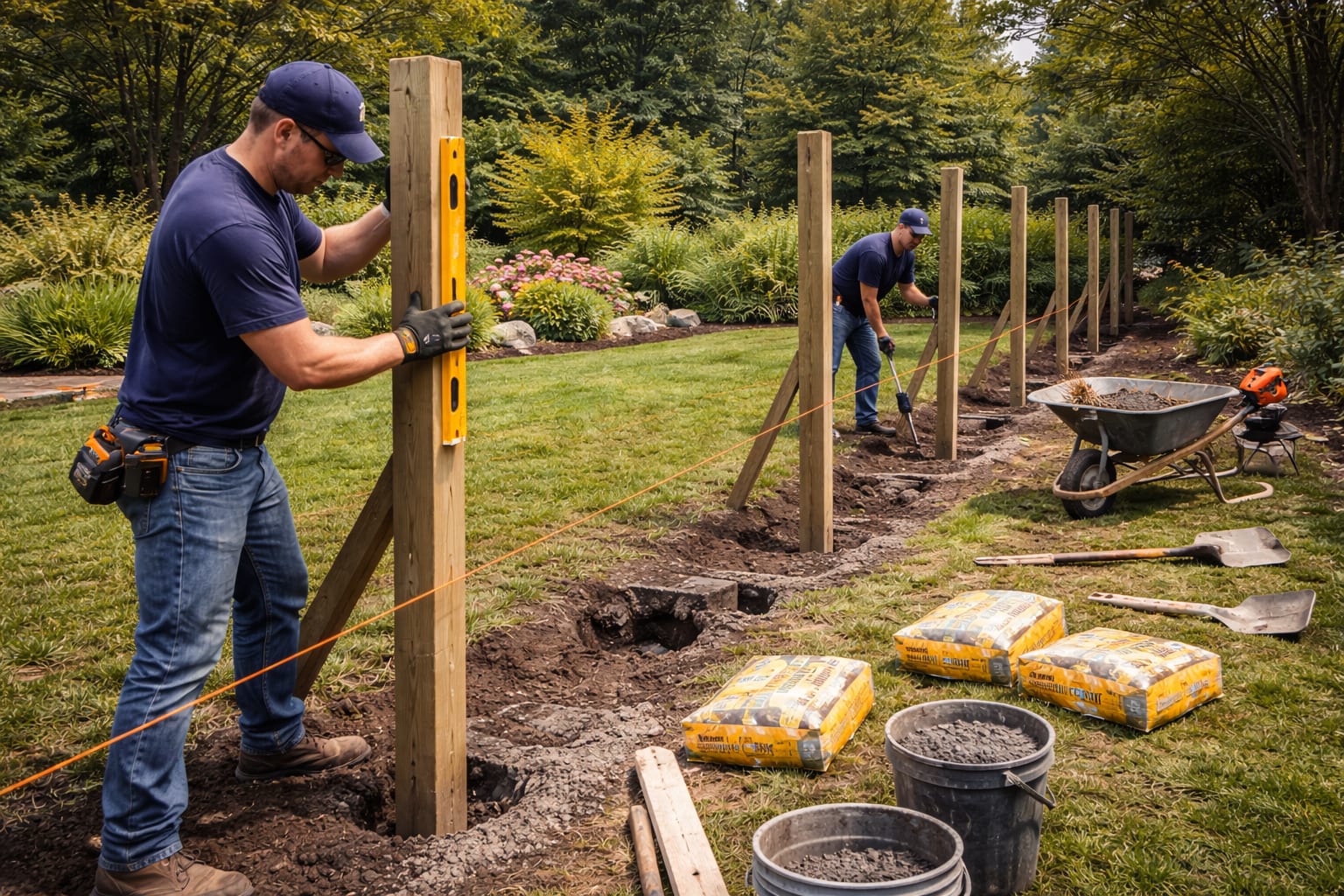

Posts are the foundation of fence stability. We focus on spacing, depth, alignment, and reinforcement—so your fence stays straight, resists wind load, and performs through Ontario freeze/thaw seasons.
- Post spacing: set consistent spacing for stronger panels and cleaner sight lines.
- Depth strategy: adjust post setting based on soil, grade, and fence type requirements.
- Gate post strength: reinforce gate posts to reduce sagging and dragging over time.
- Corner control: strengthen corners/turns where fences take the most stress.
- Alignment checks: level and string-line checks for straight runs and uniform height.
- Estimate link: price changes by height/material—see ranges in the Fence Calculator.
Panels / pickets
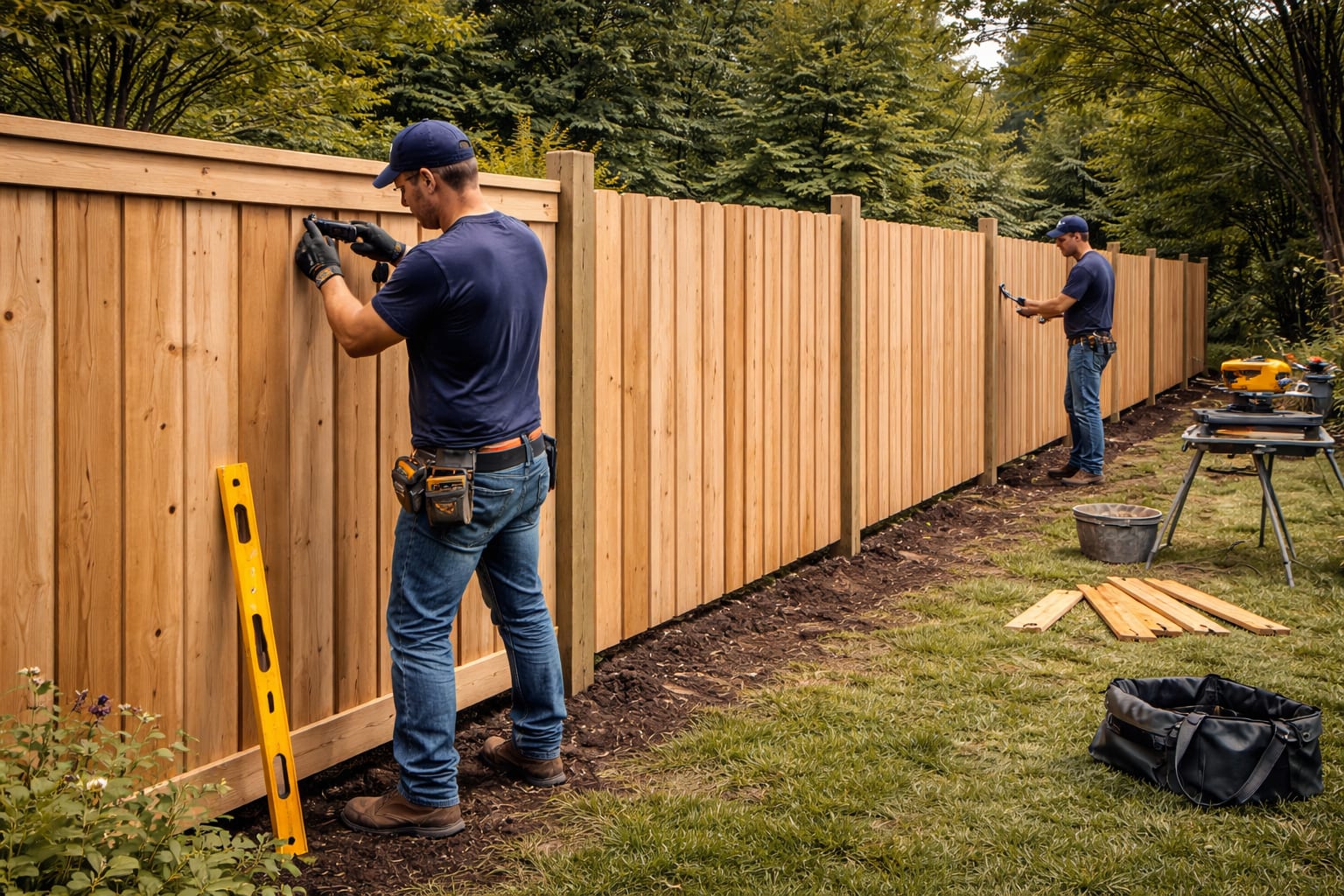

This is where your fence gets its finished look. We install panels or pickets with consistent spacing, clean lines, and secure fastening—whether it’s wood privacy, modern horizontal, chain link, or decorative styles.
- Clean lines: consistent spacing and straight runs for a premium, professional finish.
- Secure fastening: exterior-grade fasteners and proper attachment for durability.
- Style accuracy: match your selected fence type (privacy, semi-privacy, modern, etc.).
- Wind & movement: build methods that reduce rattling, warping, and loose sections.
- Upgrade options: trim/caps, lattice, and finishing details for curb appeal and longevity.
- Estimate link: check per-foot pricing in the Fence Calculator.
Gates and hardware
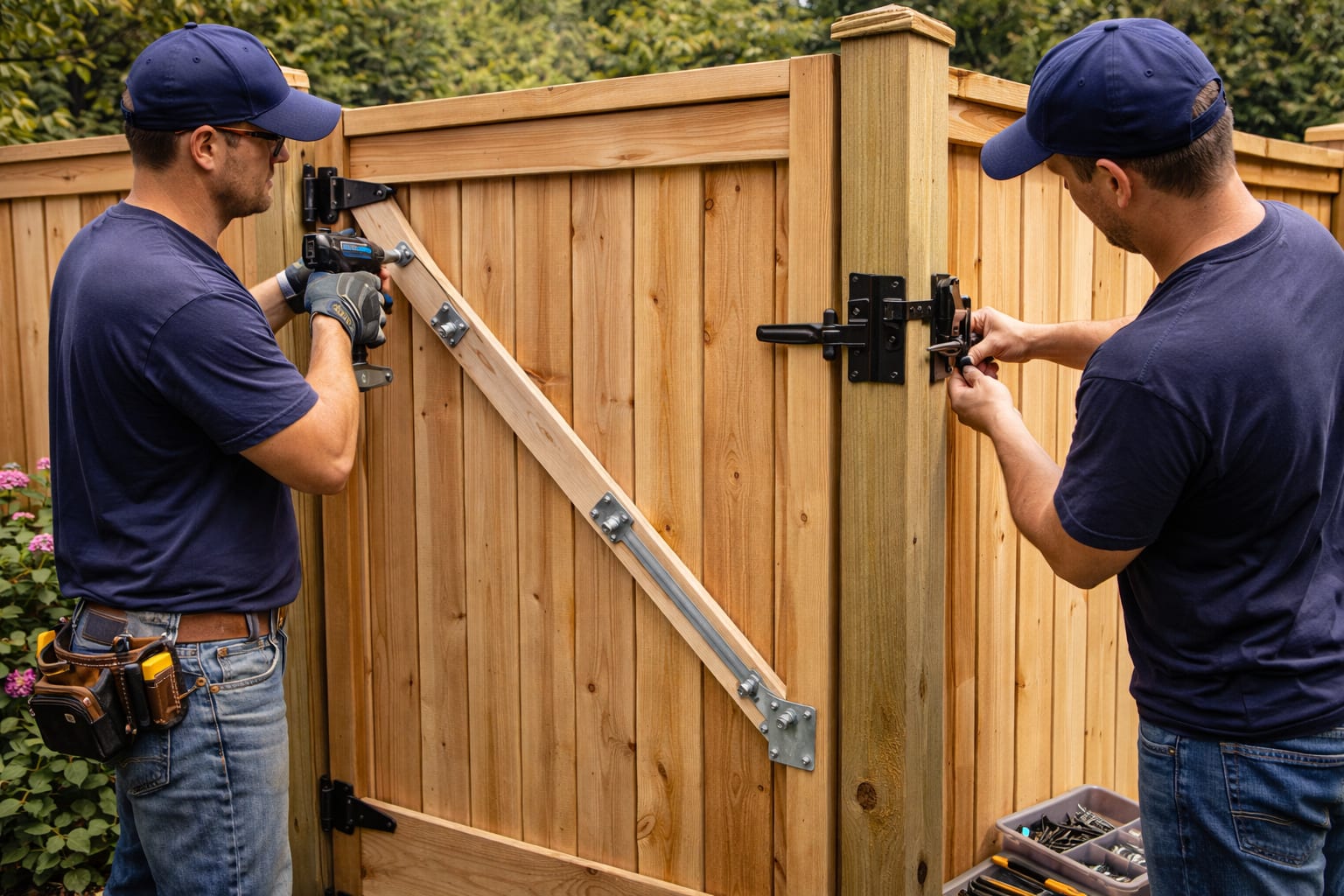

Gates are the most-used part of any fence, so hardware and framing must be done right. We focus on smooth swing, secure latching, and anti-sag reinforcement for daily reliability and long-term alignment.
- Right sizing: single or double gates sized for real access (bins, equipment, vehicles).
- Heavy-duty hardware: hinges and latches chosen for strength and frequent use.
- Anti-sag build: reinforcement options to prevent dragging and misalignment.
- Safe closure: latch placement and swing clearance for pets/kids and property security.
- Repair ready: upgrade or replace gate components without rebuilding the entire fence.
- Estimate link: add gates into the Fence Calculator for accurate ranges.
Cleanup and Inspect
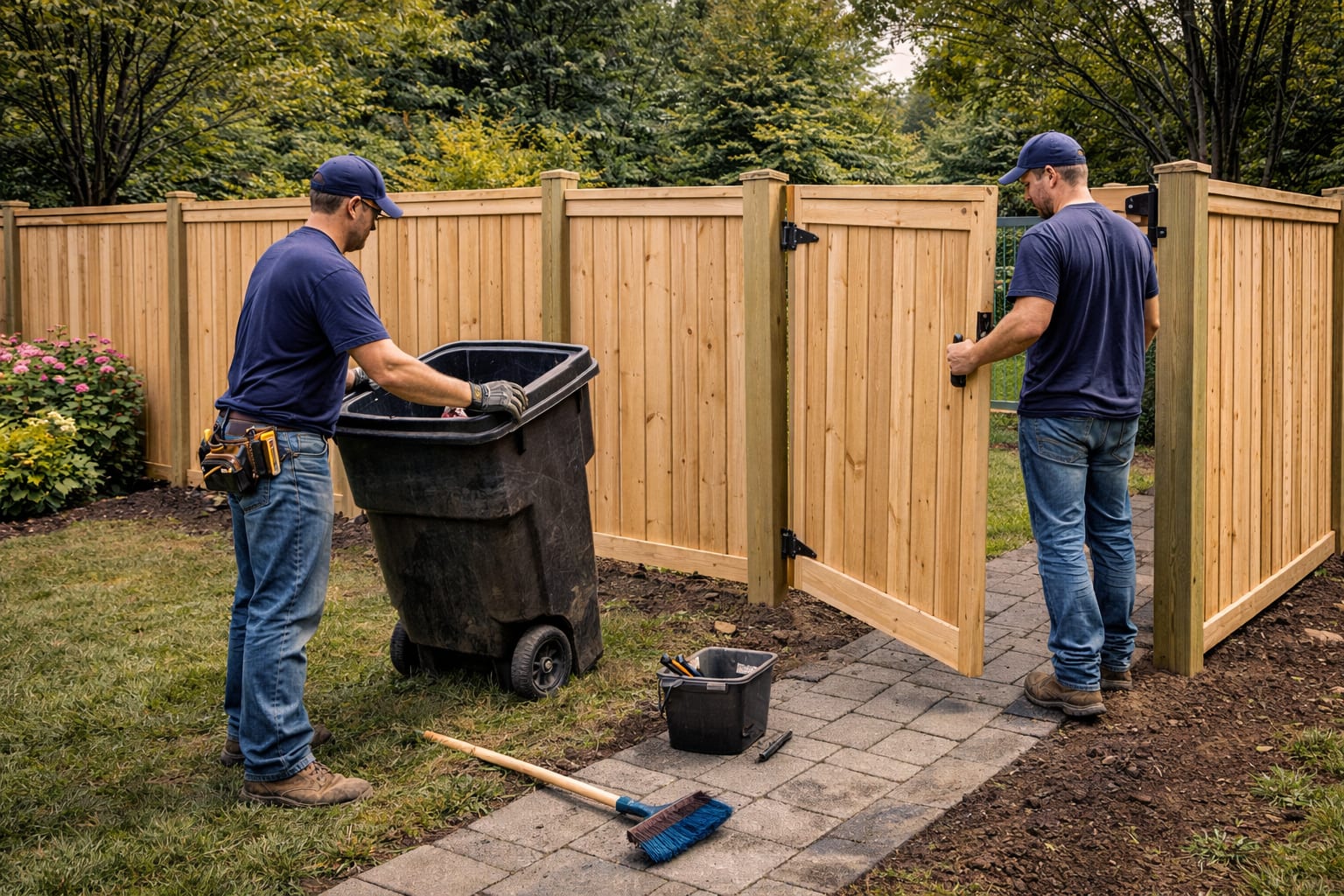
We finish with a clean site and a quality check to confirm your fence is straight, secure, and functioning properly. This final step reduces callbacks and ensures the fence looks polished from every angle.
- Jobsite tidy: remove debris and leave the area clean and safe for normal use.
- Final alignment: check straight runs, post stability, and consistent fence height.
- Hardware test: gate swing, latch lock, and hinge tightness verified.
- Finish review: inspect fasteners, edges, and visible details for clean workmanship.
- Care guidance: basic maintenance tips (staining/sealing timing if applicable).
- Estimate link: confirm scope and budget using the Fence Calculator.
fence ADVISOR
WHAT TO GATHER BEFORE YOU ESTIMATE
For a fast, accurate fence estimate in the GTA, gather the key details below before you request pricing.
- Total length (one number or side-by-side runs).
- Preferred height + style (privacy / horizontal / chain link / aluminum).
- Gate count + locations (walk gate vs double gate).
- Corners, slope/grade changes, and any tight access points.
- If you have a fence: age + issues (leaning posts, rot, sagging gates).
- Take clear photos of fence lines, corners, gates, and problem areas.
SCOPE OF WORK (TYPICAL)
A professional fence project includes planning, stable post setting, clean installation, and a finished result built for Ontario weather.
- Layout verification + fence line confirmation on site.
- Site preparation (access planning + protection of nearby areas).
- Post installation (digging/setting) for long-term stability.
- Straight runs, consistent spacing, and clean trim details.
- Gate install with reliable hinges, latches, and anti-sag options.
- Final alignment check + walkthrough for function and finish.
RECOMMENDATIONS
Choose the fence that matches your goal—privacy, safety, curb appeal, or low maintenance—then match material to the job site.
- Privacy: 6 ft solid wood is most common across the GTA.
- Value vs premium: PT wood saves cost; cedar upgrades the look.
- Low maintenance: aluminum/vinyl-style options reduce upkeep.
- Pets/kids: prioritize secure gate hardware + minimal bottom gaps.
- Longer life: staining/sealing slows graying and reduces cracking.
- Repairs: failing posts first usually fixes lean/sag long-term.
What moves the price most
Fence pricing in Ontario changes based on measurements, site difficulty, material choice, and add-ons—these are the biggest drivers.
- Length + height (plus corner count and direction changes).
- Gates + hardware quality (single vs double gate builds).
- Ground + access (rocks/roots/clay, slope, tight entry).
- Material type (wood, horizontal, chain link, aluminum).
- Upgrades (caps, trim, staining/sealing, reinforced framing).
- Old fence removal + disposal based on weight and access.
Reminder
Online ranges are a smart starting point, but final pricing depends on verifying layout, boundaries, and real site conditions in the GTA.
- Property-line confirmation prevents setbacks and rework.
- Slope/grade changes can require step-down planning.
- Hidden roots/rocks can affect digging time and depth.
- Shared fence lines may need coordination with neighbors.
- Gate placement affects post spacing, swing, and hardware.
- Photos + on-site check improve accuracy and scope clarity.
NEXT STEPS (GET YOUR ESTIMATE)
Get your estimate range, then confirm the right direction (build, repair, or maintenance) based on your fence condition and goals.
- Start here: Fence Calculator for a quick range.
- Select your path: Build new / Repair old / Maintain (stain/seal).
- Pick priority: privacy / safety / curb appeal / low maintenance.
- Choose material: wood / horizontal / chain link / aluminum.
- Upload photos: corners, gates, slope, and any damaged sections.
- Request a quote to confirm scope, budget, and timeline.
Fence Advisor — GTA Fence Installation, Repair & Maintenance
Choose your city, tell us what you need (new fence build, fence repair, or fence maintenance/staining), and get a personalized recommendation for the best fence type and next steps in Ontario.
1) Location & project type
Start here. This decides which questions you see next.
2) Fence details
Questions change based on your project type.
3) Preferences
We use this to recommend the best fence type (and whether repair vs replace makes more sense).
4) Budget & maintenance
Budget and upkeep expectations impact the best fence recommendation in the GTA climate.
5) Site factors
These affect install approach, not just fence type—especially for repair or replacement.
6) Your recommendation
Based on your answers, here is the best next step and fence type recommendation.
Fence Installation, Repair & Staining in Oakville, Burlington, Milton & Richmond Hill
- Warranty-backed workmanship
- Local crew (Ontario)
- 3-month financing option
Response within 2 business hours. No pressure — just a clear plan and a realistic estimate range.
Tell us the basics — we’ll reply with the next steps and an estimate range.
Fence Projects Made Easy
Compare the typical fence installation experience with the MyAurora way — clear communication, clean workmanship, and a managed process for fence building, fence repair, and fence staining across Toronto and the GTA.
Why Choose MyAurora for Your Fence?
- Vague pricing, unclear scope, and surprise add-ons
- Weak posts or rushed install that leads to leaning or sagging gates
- Little guidance on fence type (privacy vs safety vs curb appeal)
- Messy jobsite and poor cleanup around gardens and walkways
- No plan for repairs, staining, or long-term maintenance
- Clear, itemized quote with defined scope (install / repair / stain)
- Proper layout + post setting for straight lines and strong stability
- Fence-type guidance: wood privacy, horizontal, chain link, aluminum, pool/safety
- Quality gate hardware + anti-sag options for smooth daily use
- Clean finish details + optional staining/sealing to extend fence life
Fence Installation & Repair Payment Structure
To protect homeowners across Toronto and the GTA (Oakville, Mississauga, Burlington, Milton, Brampton, Vaughan, Richmond Hill and nearby cities), MyAurora uses a clear, milestone-based payment schedule for fence installation, fence repair, and fence replacement. Payments are linked to real progress—so you’re not paying far ahead of the work.
- 20% – Booking & layout confirmation
This secures your install/repair date and covers site visit planning, measurements, fence line confirmation, and material takeoff for your wood, chain link, aluminum/metal, or pool/safety fence. - 35% – Material delivery & jobsite setup
Due once materials are ordered and staged (or delivered) and we’re ready to start. This includes posts, panels/rails, concrete, hardware, and gate components based on the agreed scope. - 35% – Mid-project milestone (posts set / structure built)
Collected when key structural work is completed—typically after posts are set and aligned, and the main fence run is underway (panels/boards/mesh installed). For repairs, this aligns with completing the primary fixes (post replacement, section rebuild, or gate re-hang). - 10% – Completion & final walkthrough
The final payment is due only after the fence is finished, cleanup is complete, gates swing properly, and you approve the result. We do a walkthrough and confirm hardware alignment, stability, and finish details.
This payment structure keeps fencing projects transparent and fair, aligning each payment with a clear milestone and verified progress—whether you’re building new, fixing an old fence, or upgrading gates and hardware.
Fence Installation & Repair Service Areas – Toronto & the GTA
MyAurora provides fence installation, fence repair, and fence staining across Toronto and the GTA, including Oakville, Mississauga, Burlington, Milton, and surrounding communities. We build and service wood privacy fences, modern horizontal fences, chain link fences, aluminum/metal fences, and pool/safety fencing—with clean workmanship and clear scope.
Whether you need a new fence for privacy, security, or curb appeal, our team handles on-site layout, post stability, gate hardware, and finish details. We also fix common issues like leaning posts, sagging gates, broken panels, and aging wood that needs sealing or staining. For fast ballpark pricing, use the Fence Estimator Calculator on our website and request a detailed quote for a measurement-verified estimate.
WHY HOMEOWNERS TRUST MYAURORA FOR BASEMENT RENOVATIONS
- Licensed & insured: Professional basement renovation crews you can trust in Oakville, Halton Hills and the west GTA.
- WSIB-covered teams: Safe, compliant job sites with full worker coverage for every finished basement and legal secondary suite project.
- Code-compliant work: Basements and legal basement apartments designed to meet Ontario Building Code and local municipal requirements.
- Transparent pricing: Clear written basement renovation quotes before any work begins – no hidden fees or surprise add-ons.
- Workmanship warranties: We stand behind our framing, drywall, flooring and finish work with written workmanship guarantees.
- Clean, respectful process: Scheduled work, regular updates and careful daily clean-up so your home stays as livable as possible during the project.
Fence Installation & Repair Reviews from Toronto & GTA Homeowners
Homeowners across Toronto and the GTA choose MyAurora for clean, straight, and durable fence installation, fence repair, gate work, and fence staining/sealing. These reviews highlight real projects where we improved privacy, safety, curb appeal, and long-term fence performance.
We needed a solid privacy fence for the backyard and a gate that wouldn’t sag. MyAurora measured the fence line, set the posts straight, and installed clean panels with consistent spacing. The gate swings perfectly and the fence looks professional from both sides. It immediately improved privacy and made our Oakville yard feel finished.
Our fence was leaning badly and one post was rotting. The team explained what could be repaired vs replaced, then replaced the weak posts and reinforced the gate hardware. The fence is straight again, the gate closes properly, and the repaired sections match the existing fence so it doesn’t look patched.
We wanted a modern horizontal fence that would look high-end and increase curb appeal. MyAurora planned the layout carefully so the lines stayed level and the framing felt strong. The final look is exactly what we wanted— clean, modern, and built to last through Ontario weather.
We needed a budget-friendly fence that would keep our dog safely in the yard. The chain link install was quick, neat, and properly tensioned so it doesn’t feel loose. MyAurora also helped us choose the best gate location for daily use, and the latch works smoothly every time.
Our wood fence was fading and starting to look dry. MyAurora handled the prep and applied a stain/sealer that brought the colour back and made the boards look even again. The finish looks clean (no drips or patchy areas), and we feel confident it’s protected for the next few seasons.
We wanted a wider gate for easier backyard access. MyAurora installed a double gate with strong hinges and anti-sag support so it stays aligned. The gate feels sturdy, opens smoothly, and the hardware looks clean and secure. It’s one of the most useful upgrades we’ve done to the property.
We needed a pool safety fence with a gate that would self-close properly and feel secure. MyAurora walked us through the layout, planned the gate position, and completed a clean install that looks great around the pool area. The gate hardware is solid and the whole enclosure feels safe for kids.
Our old fence was falling apart and we wanted a full replacement. The crew removed the old material, kept the worksite tidy, and rebuilt the fence with straight runs and clean corners. The new fence looks uniform, the posts feel strong, and our backyard finally has the privacy we wanted.
We wanted a clean front-yard fence that wouldn’t require constant maintenance. MyAurora helped us choose an aluminum style that matched the house, then installed it with proper spacing and a solid gate. It looks sharp, feels secure, and the whole project was organized from start to finish.
FAQ – Fence Installation, Repairs & Maintenance (Toronto & the GTA)
Planning a new fence, fixing an old one, or maintaining your current fence in Toronto or the GTA brings up a lot of important questions about pricing, property lines, city by-laws, fence height rules, materials, and long-term durability in Ontario weather. This FAQ pulls together the most common questions homeowners ask before installing, repairing, staining, or upgrading a fence. Use these answers as a practical guide to understand different fence types (wood privacy, modern horizontal, chain link, aluminum/metal, and safety fencing), what impacts cost per linear foot, how gates and access affect labour, what to expect for timelines, and how to protect yourself with clear scope, written warranties, insurance, and WSIB-covered crews. It’s general information only, but it will help you have a more confident, informed conversation about your fence project.
Pricing
Fence installation cost in Toronto and the GTA depends most on fence type, height, total length, gate count, and site conditions (slope, soil, and access). Chain link is usually the lowest installed price for boundaries, while wood privacy, modern horizontal, and aluminum/metal fences can cost more due to materials, framing, and finish work. For a fast, measurement-based range, use our Fence Calculator or request a free estimate.
In Ontario, a wood privacy fence is usually priced per linear foot because cost scales with length, height, and post setting. Pressure-treated wood tends to be more budget-friendly, while cedar is commonly a premium upgrade for look and longevity. Your real cost per foot changes with height (4’–8’), post size (4×4 vs 6×6), corners, removal of an old fence, and gate hardware. To get a tailored range for your property, use our Fence Calculator or request a free estimate.
- Best for: backyard privacy + warm, natural look.
- Cost jumps: taller fences, more corners, more gates, tighter access.
- Next step: enter linear footage in the Fence Calculator.
Modern horizontal fences in the GTA typically cost more per foot than standard vertical privacy fences because they often require stronger framing, straighter lines, and cleaner finish details. This style is popular for front-yard curb appeal and modern homes, especially with upgraded posts, trim/caps, and premium gate hardware. For a measurement-based estimate that reflects your height, material, and upgrades, use our Fence Calculator or request a free estimate.
- Best for: modern homes + statement fencing.
- Upgrade priorities: stronger posts, clean trim, quality gate hardware.
- Estimate: run your numbers in the Fence Calculator.
The cheapest fence to install in Ontario is often chain link for simple property boundaries, or a basic pressure-treated wood fence when you need privacy. The “cheapest” option can change quickly if you need extra height, multiple gates, old fence removal, or if access is tight—because labour increases in those conditions. To compare options based on your measurements, use our Fence Calculator or request a free estimate.
- Lowest cost for boundaries: chain link (simple run).
- Lowest cost for privacy: basic pressure-treated wood.
- Compare fast: use the Fence Calculator.
Installed chain link fence pricing in Toronto is usually one of the most budget-friendly choices, especially for side yards, boundaries, and pet containment. Costs shift with height, total length, terminal posts, gate type, and upgrades like black vinyl coating or privacy slats. Tight access and tough digging can also raise labour even if materials are affordable. For a quick estimate range based on your property, use the Fence Calculator or request a free estimate.
- Best for: durable boundaries, pets, low maintenance.
- Common upgrades: black-coated chain link, privacy slats, matching gates.
- Get a range: enter your length + gates in the Fence Calculator.
Aluminum/metal fencing in the GTA typically costs more than chain link and many basic wood builds, but it’s popular for clean curb appeal and minimal maintenance. Installed price varies by panel style, height, grade changes, and gate count—plus the level of customization. If you want a long-lasting fence with a premium look, aluminum is often a strong choice. For a tailored estimate, use our Fence Calculator or request a free estimate.
- Best for: front-yard curb appeal + long lifespan.
- Cost drivers: gates, slope, custom panels, premium hardware.
- Estimate: use the Fence Calculator.
Fence staining/sealing in the GTA is often priced per square foot and depends heavily on preparation and the existing condition of the wood. New or clean wood is quicker, while weathered, previously stained, or painted fences can require extra washing, sanding, or stripping. Costs also change based on the number of coats and whether you’re staining one side or both sides. To estimate your fence area and get a range, use our Fence Calculator or request a free estimate.
- Best for: extending wood life + improving curb appeal.
- Cost jumps: heavy prep, both sides, multiple coats.
- Quick range: use the Fence Calculator.
In Ontario, staining is usually cheaper than replacing when the structure is still solid (posts stable, panels intact, gates working). Replacement becomes the better investment when posts are rotting/leaning, multiple sections are failing, or the fence is near end-of-life. A common solution is “repair + stain”: fix posts/sections first, then stain/seal to protect the rest. If you’re deciding between repair, maintenance, or replacement, use the Fence Calculator or request a free estimate.
- Choose stain/seal if: fence is solid but weathered.
- Choose replace if: posts failing, widespread rot, repeated leaning.
- Unsure? start with an estimate using the Fence Calculator.
Fence pricing is driven most by total length (linear footage) and height, then gates, access, and ground conditions. Tight side-yard access adds labour. Rocky/clay soil increases digging time. Sloped ground requires extra layout work and clean transitions. Corners and direction changes can also add time and materials. For a quick pricing range based on these real factors, use our Fence Calculator or request a free estimate.
- Top drivers: length + height + gates.
- Big labour add-ons: slope, tight access, tough digging, removal.
- Fast estimate: enter your details in the Fence Calculator.
Gates raise fence cost because they need additional framing, hardware, alignment, and often stronger posts. Single gates are usually easier to keep aligned and are common for daily backyard access. Double gates cost more due to heavier materials and higher sag risk—so upgraded hinges, latches, and anti-sag bracing are often worth it. To price gates into your project accurately, use the Fence Calculator or request a free estimate.
- Single gate: best for daily access.
- Double gate: best for equipment/vehicle access—budget for stronger hardware.
- Include gates in pricing: use the Fence Calculator.
Sloped ground can increase fence installation cost in Ontario because sections may need stepped or racked installation, custom cuts, additional posts, and more layout time to maintain clean lines. Slope can also affect gate alignment—especially double gates—so stronger posts and hardware matter more on uneven grade. For a realistic estimate that accounts for slope and access, use our Fence Calculator or request a free estimate.
- Expect added labour for: stepped/racked sections and custom fitting.
- Plan gates carefully: slope increases alignment and sag risk.
- Get a range: use the Fence Calculator.
To estimate your fence cost in the GTA, use a fence calculator that asks for your location, service type (build, repair, stain/maintenance), total fence length, gate count, and access conditions. For a measurement-based estimate range and a quick next step to get a detailed quote, use our Fence Calculato or request a free estimate.
Materials
In Ontario’s freeze–thaw and wet spring conditions, a pressure-treated wood fence can last a long time when the posts are set properly, water can drain, and the wood is sealed on a maintenance schedule. Most early failures come from post rot, trapped moisture at the base, and lack of drainage—not the boards themselves.
Cedar is naturally resistant to decay and insects, which makes it a strong choice for Ontario backyards—especially if you care about appearance and stability. It can be “worth it” when you want a lighter, premium look, fewer twists, and better long-term curb appeal, as long as you still protect posts and use good fastening.
For true privacy in Toronto and the GTA, a solid wood privacy fence is usually the top pick because it blocks sightlines and can be built in multiple styles (classic vertical, board-on-board, or modern horizontal). Your “best” option depends on how much wind exposure you have, whether the fence is shared, and how much maintenance you want.
For dogs and kids, the “best” backyard fence is the one with secure gates, minimal gaps, and hardware that won’t sag over time. Wood privacy fences and vinyl panels are common for containment, while chain link is great when you want visibility plus strong boundaries—especially for larger yards.
In Ontario, low-maintenance usually means you want a fence that doesn’t need staining, resists moisture, and stays straight through seasonal swings. Aluminum is a top choice for long-term minimal upkeep, vinyl is low-maintenance but needs quality installation and reinforcement, and composite offers a premium look with less maintenance than wood.
<div=”” id=”mat-curb-appeal”>
For curb appeal in the GTA, modern horizontal fences and clean aluminum/metal fences often stand out the most because they look intentional, symmetrical, and “architectural.” Cedar privacy with trim/cap and matching gates is also a strong curb-appeal upgrade—especially when stained evenly.
In Ontario, posts typically need to be installed below frost depth so freeze–thaw movement doesn’t heave the fence out of alignment. Many projects use concrete for stability, but the real “secret” is correct depth, good drainage (gravel where appropriate), and straight alignment—especially for gates and long runs.
For most standard backyard fences, 4×4 posts can work when spacing, depth, and hardware are done correctly. In Ontario wind and winter conditions, 6×6 posts are often the better choice for heavy gates, taller fences, long straight runs, and modern horizontal designs where stiffness matters more.
Modern residential pressure-treated lumber commonly uses newer preservative systems designed for exterior use when installed correctly. For longevity, the “best material” depends on what you value: wood looks warm but needs maintenance, aluminum is extremely low-maintenance, vinyl is low-maintenance with good reinforcement, composite is premium with reduced maintenance, and chain link is durable and budget-friendly.
In Ontario’s freeze–thaw weather, staining is usually the safer long-term finish for wood fences because it penetrates the wood and is easier to maintain without peeling. Paint can look sharp, but once it cracks or peels, it often requires heavier prep and spot failures stand out more. If your fence is already painted, you can maintain paint—just expect more surface prep over time.
The best time to stain or seal a new fence is when the wood has dried enough to accept finish properly. In the GTA, timing depends on sun exposure, rainfall, and how “wet” the lumber was at install. Sealing too early can trap moisture; waiting too long can lead to early graying and surface checking that needs more prep.
Wind performance comes down to structural choices: post size, post depth, spacing, and how the panels are built—not just the “look.” Semi-privacy designs (with small spacing) can reduce wind load, while full solid privacy can act like a sail if framing is light. Modern horizontal fences often need stronger posts and framing because they show movement more visibly.
Gates are usually the first part of a fence to sag if hardware is undersized or framing isn’t stiff. The most important hardware choices are heavy-duty hinges matched to gate weight, a reliable latch that lines up consistently, and anti-sag bracing (or a rigid frame) so the gate stays square through Ontario seasons. Good hardware also improves safety for kids/pets and reduces “sticky gate” issues.
For Ontario’s seasonal movement (freeze–thaw + humidity swings), exterior-rated screws usually hold fence boards more securely over time and make future board replacement easier. Nails can be faster to install, but boards may loosen or “pop” as the wood expands and contracts—especially on gates, high-wind areas, and fences with heavy daily use. The best result comes from using corrosion-resistant fasteners matched to your material (pressure-treated, cedar, or composite) so you avoid rust streaks and premature failure.
Repairs and Maintenance
In most GTA homes, a fence is repairable when the posts are still solid and the damage is limited to boards, rails, a few sections, or gate alignment. Replacement is usually smarter when posts are rotting, leaning in multiple areas, or the fence is nearing end-of life (widespread rot, loose framing, repeated failures). A quick way to decide: if you can push a post and it moves at the base, the structure likely needs post replacement or a rebuild.
Yes—fence fixing is common in Ontario. Typical repairs include replacing failed posts, swapping broken boards/pickets, reinforcing sagging rails, straightening leaning runs, re hanging gates, upgrading hinges/latches, and correcting sections that shift after freeze thaw cycles. The best long-term fixes focus on structural points (posts, gate framing, hardware) rather than only cosmetic boards.
Ontario freeze–thaw cycles can heave soil and loosen post bases—especially in clay soil or areas with poor drainage. Leaning can also come from undersized posts, shallow footings, or wind load on privacy panels. Fixes usually include resetting or replacing posts, improving post stability, and re-aligning sections so the fence stands plumb and stays that way through seasonal movement.
Most sagging gates come from hinge wear, weak gate framing, or posts that have shifted. A proper repair usually includes re-setting hinges, adding anti-sag bracing, upgrading hardware, and confirming the hinge-side post is solid and plumb. In many GTA yards, a “quick latch adjustment” works temporarily—while the real solution is reinforcing the gate frame and post support.
You can often repair or replace one section if the surrounding posts and rails are stable. This is common for storm damage, localized rot, or impact damage. The key is matching height, spacing, and materials so the repaired section blends in and performs the same as the rest of the fence.
For pressure-treated or cedar fences in Ontario, the best maintenance routine is: keep soil and mulch off boards, maintain drainage, do seasonal hardware checks, and apply stain/sealer on a schedule. Regular sealing helps reduce water absorption, cracking, and early rot—especially on south-facing fences that take full sun.
A typical Ontario schedule is re-staining or re-sealing every 2–4 years, depending on sun exposure, fence condition, and product type. New wood often benefits from sealing once it’s dry enough, while older fences may need cleaning and prep first. If water no longer beads on the surface, it’s usually time to recoat.
Light washing can help remove dirt and mildew, but aggressive pressure can “fuzz” wood fibers, create striping, and drive water deep into boards. In the GTA, the safest approach is a gentle wash (right nozzle + distance), proper dry time, and spot sanding where needed—especially on older cedar or weathered boards.
The most common issues are leaning posts, loose panels/rails, gate sag, rot near grade, hardware corrosion, and shifting after winter. These usually come from moisture at the bottom of boards, poor drainage, shallow footings, or heavy wind load on privacy fences. Fixing the structure first (posts + gate framing) prevents repeated cosmetic repairs.
Rot usually starts where boards stay wet—near soil, snow piles, sprinklers, or shaded areas with poor airflow. Keep a small clearance between boards and grade, avoid piling mulch against wood, improve drainage, and consider gravel strips or weed barrier solutions for moisture control. Sealing the fence also helps slow water absorption over time.
Quality repairs should aim to match height, spacing, style, and finish so the repaired sections don’t look “patched.” When the existing fence is older or sun-faded, a stain/cleaning plan can help blend new boards with old ones. For gates, matching hardware (hinges, latches, post caps) improves both look and function.
The fastest way to get a realistic ballpark is to enter your fence type and details in an estimator, then follow up with photos (leaning areas, posts, gates, and total length). For a measurement-based range across the GTA, use: Fence Estimates.
Rules and process
Often, a standard backyard fence does not require a building permit, but you still must follow your city’s fence by-laws (height limits, corner-lot visibility rules, pool enclosure rules, and property-line requirements). Some situations can trigger extra requirements especially pool safety fences, fences near roads/intersections, or anything tied to a site plan or special property conditions.
In many GTA municipalities, front-yard fences are limited to a lower height (often around 3–4 ft) to maintain sightlines, while backyard/privacy fences are commonly allowed higher (often around 6 ft). Corner lots and “daylight triangle” areas can have stricter limits to protect driver and pedestrian visibility.
You can often build on or near a property line, but it’s critical to confirm the line before installation. Many disputes happen because the assumed boundary is off by a foot or two. The safest approach is verifying your boundary using existing survey documents (if available) or professional confirmation when needed—especially before installing posts or a long run.
Yes—pool enclosures typically have stricter requirements focused on safety: minimum fence height, self-closing/self-latching gates, climb-resistant design, and specific gate swing/latch placement. Because rules can vary by municipality, pool fence planning should start with local requirements and a layout check before building.
Yes—before digging post holes, you should arrange for utility locates. Underground gas, electrical, communications, or other services can run along property lines and side yards. Proper locates reduce risk, delays, and expensive damage—especially in older GTA neighborhoods where utility routing can be unpredictable.
Winter installs are sometimes possible, but they depend heavily on soil conditions, frost depth, access, and safety. Frozen ground can slow digging and increase labour. Many homeowners plan installs for spring through fall for smoother scheduling and better site conditions, while repairs and gate fixes can still be handled in colder months depending on the situation.
A professional fence project usually follows a predictable sequence: confirm location and goals, verify layout and fence line, plan gates and access, arrange materials, set posts (digging + alignment), install panels/boards/rails, hang and adjust gates, complete finish details, and do a final walkthrough. Good process reduces surprises and helps the fence stay straight and durable through Ontario seasons.
Timelines depend on total length, fence type, number of gates, removal needs, and access. Many typical backyard fence installs can be completed in a few days once materials are ready, while complex layouts (many corners, slope, tight access) or specialty fences may take longer. Repairs and staining can be faster depending on prep requirements.
The fastest accurate quote comes from: total fence length (or each side), desired height, fence type/style, number of gates (single/double), whether old fence removal is needed, and access constraints (tight side yard, obstacles, slope). Photos of the fence line and gates are extremely helpful for repair and maintenance pricing.
Layout planning typically includes confirming the fence run, checking corners and grade changes, planning gate locations for daily use, and deciding how to handle slope (stepped vs racked panels where applicable). Proper layout prevents “zig-zag” runs, awkward gate placement, and uneven height lines that look unprofessional.
Hard digging and tight access are common in the GTA. Rocky soil, dense roots, clay, and narrow side yards typically increase labour time and may require different post-setting methods or equipment planning. A good process identifies these conditions early so the scope and pricing remain realistic.
A clean fence install includes basic protection of nearby surfaces (plants, decks, interlock, AC units), controlled material staging, and daily tidy-up so your yard stays usable. At the end, a proper walkthrough checks alignment, gate swing/latch performance, hardware tightness, and finish details to ensure the fence looks straight and works smoothly.